Last updated: 2026-06-22
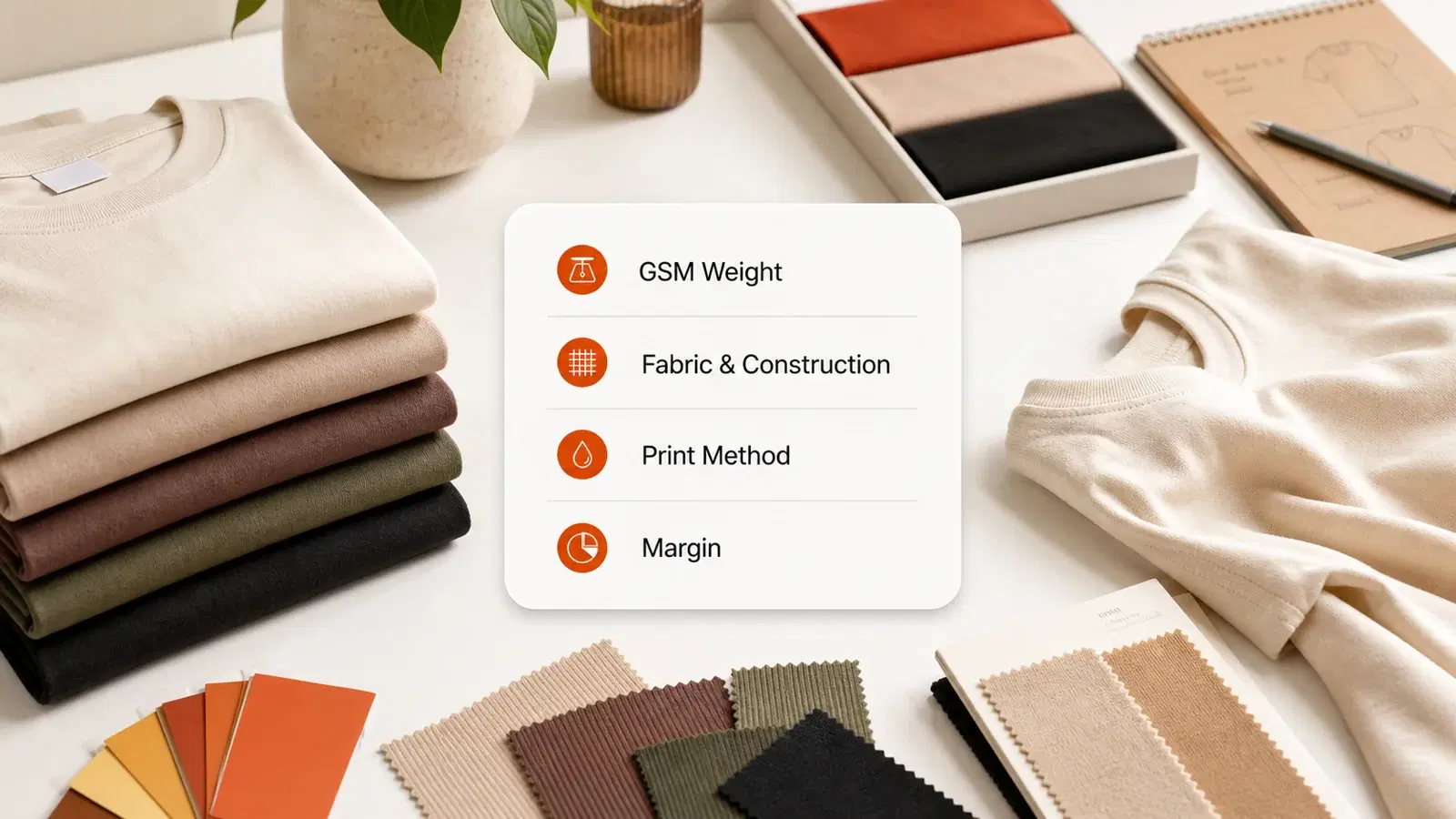
To choose the right blank for your clothing brand, match four things at once: what your print-on-demand provider actually stocks, the fabric weight and quality your niche expects, the print method your design needs (DTG or DTF), and the margin you can keep after platform fees. The "best" blank isn't the softest or the one a blog ranked first, it's the one that's available in your catalog, prints cleanly, fits your customer, and still leaves you a profit. Everything below is a framework for getting all four right.
Here's the part most guides skip: the blank is the single decision that quietly controls your print quality, your reorder rate, and your unit economics, and almost nobody teaches you how to decide. They hand you a "Top 10 Blank Brands" list and walk away. Worse, most of those lists assume you're buying wholesale by the case, when a print-on-demand founder can only pick from whatever Printful or Printify happens to offer.
You already feel this, because you've probably opened a SERP full of near-identical listicles drowning in jargon: GSM, ringspun, combed, garment-dyed, side-seamed, singles versus doubles. This guide turns that jargon into a decision. By the end, you'll know exactly how to pick a blank for your niche, your print method, and your budget, and how to see your design on it before you spend a cent on a sample.
Key Takeaways
- For a print-on-demand brand, choosing a blank is a four-way fit: POD catalog availability × fabric weight/quality × print method (DTG/DTF) × margin. Optimizing one and ignoring the rest is how good designs end up on the wrong shirt.
- Fabric weight (GSM) is your fastest signal. Midweight (160–200 GSM) is the all-purpose retail standard; premium streetwear runs 220–320 GSM, with ~300 GSM the common choice.
- Match the blank to the print method, not just your taste. DTG prints best on natural ringspun cotton; DTF handles blends, polyester, and dark garments without pre-treatment.
- Your blank choice is capped by your POD provider. Printful is one in-house manufacturer (consistent, pricier); Printify is a network of 90+ providers (cheaper, more variable), so lock your provider and sample before you trust a SKU.
- See the design before you sample. AI mockups let you compare your artwork across blanks, colors, and fits in minutes, so you only pay to sample the finalist.
In this guide:
- The 7 things that actually matter
- Start here: your blank is limited to your POD catalog
- Factor 1: Fabric weight (GSM)
- Factor 2: Fabric and construction quality
- Factor 3: Match the blank to your print method
- Factor 4: Fit, color, and size consistency
- Factor 5: Cost and margin
- See it before you commit: mockups as a selection step
- Quick brand reference
- Niche-to-blank decision tree
- When to graduate to cut-and-sew
- FAQ
The 7 Things That Actually Matter When Choosing a Blank
Before the deep dives, here's the whole framework in one list. If you remember nothing else, remember these, in order:
- POD availability — can you actually get this blank through your provider?
- Fabric weight (GSM) — does the feel match your niche?
- Fabric and construction quality — ringspun? combed? side-seamed? pre-shrunk?
- Print-method match — does it suit DTG or DTF?
- Fit and color range — does it flatter your customer and show your design?
- Sizing and return risk — will it cost you in refunds and bad reviews?
- Cost and margin — does it survive your price after fees?
Notice that "which brand is best" isn't on the list. Brand is downstream of these factors, not a starting point. Two founders can correctly choose two completely different blanks because their niches, print methods, and margins differ. Let's work through each factor.
Start Here: Your Blank Is Limited to Your POD Catalog
This is the reality nearly every "best blanks" article ignores, and it changes everything.
When you run print-on-demand, you don't shop the open wholesale market. You choose from your provider's catalog, and that catalog is finite. A boutique 6.5 oz blank that an apparel blog crowns "best of 2026" is useless to you if you can't dropship it. So the first filter isn't quality, it's availability inside the platform you're actually selling through.
The two dominant providers behave very differently. Printful is a single in-house manufacturer: more consistent, more expensive, and easier to trust SKU-to-SKU. Printify is a network of 90+ third-party providers: cheaper, but quality and even the exact garment can vary by who fulfills your order. On Printify, the same "Bella+Canvas 3001" listing can be produced by different print shops using different methods.
That variance creates a trap. If you upload a DTF-optimized file and your order routes to a provider running DTG, you get a different product than the one you tested. The fix is simple but non-negotiable: lock your preferred provider before you publish, and order a sample of that exact SKU before you trust it. One sample costs you a few dollars and a week. A wave of "this isn't what the photo showed" returns costs you your store's health.
Want to skip the guesswork on what your blank will actually look like printed? See how Vaybel renders your design on real catalog blanks before you ever place an order →
Factor 1: Fabric Weight (GSM) — Match Feel to Niche
GSM (grams per square meter) is the single fastest way to read a blank. It tells you how heavy, structured, and "premium" a shirt feels before you ever touch it, and it maps almost directly onto your niche.
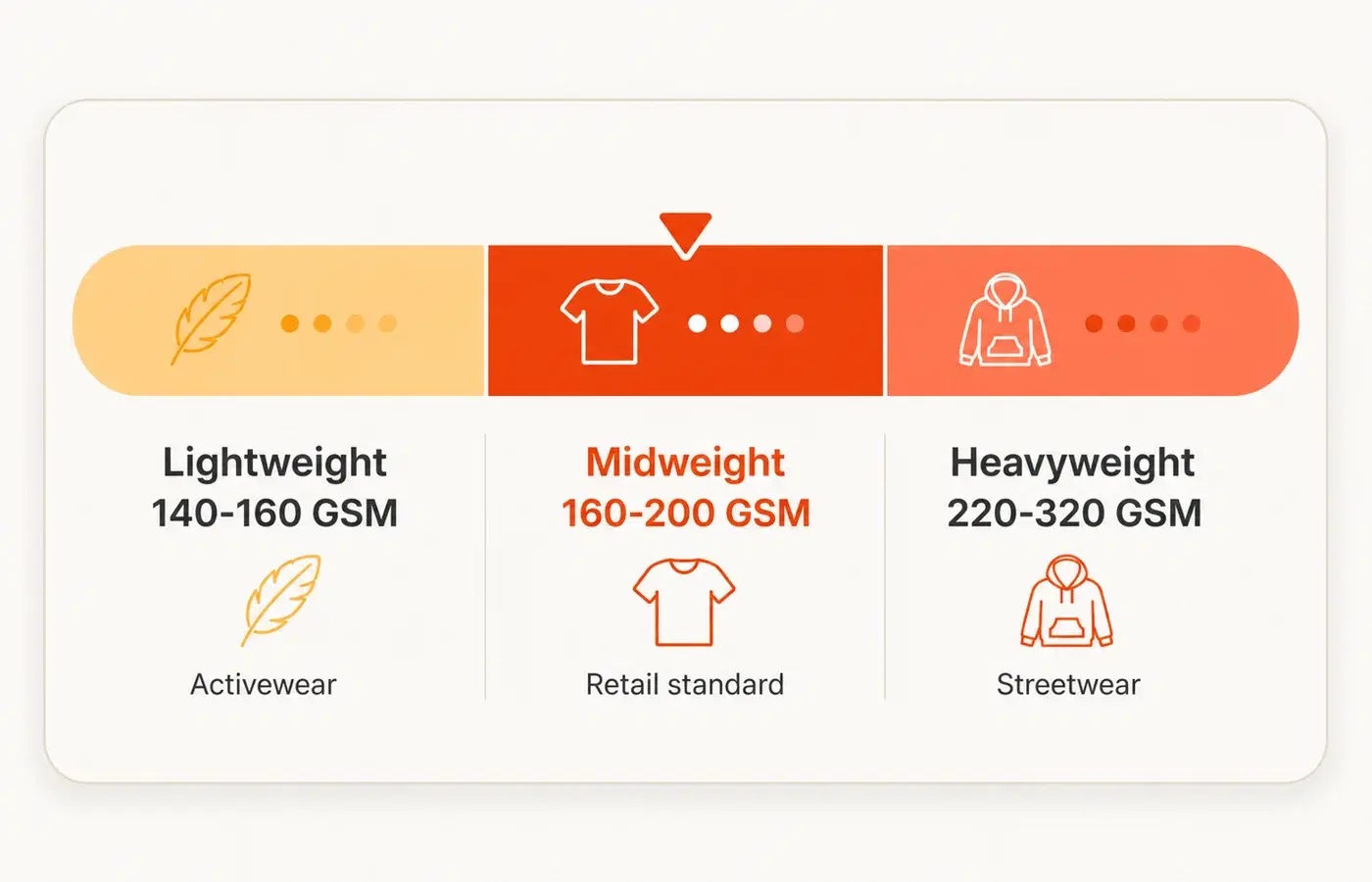
Here's the translation table that turns the spec into a decision:
| Weight class | GSM range | How it feels | Best for | Print methods | Typical blanks |
|---|---|---|---|---|---|
| Lightweight | Under 160 | Thin, airy, can be sheer | Activewear, layering, hot climates | DTG (light colors), sublimation | Next Level (lighter cuts), poly blends |
| Midweight | 160–200 | The everyday "retail tee" feel | Brand basics, private label, most merch | DTG, DTF, screen, light embroidery | Bella+Canvas 3001, Next Level, Gildan Softstyle |
| Heavyweight | 200–320+ | Structured, substantial, drapes well | Premium streetwear, oversized fits | DTF, screen, DTG on cotton | Comfort Colors, AS Colour heavyweight, premium blanks |
A few rules of thumb fall straight out of this. Midweight (160–200 GSM) is the versatile sweet spot for most retail brands and private-label lines, because it works across seasons and with every print method. If you're launching general basics, start here and you'll rarely be wrong.
Streetwear is the big exception. Premium streetwear standard runs 280–320 GSM, with 300 GSM the most common choice among serious labels. The extra weight isn't vanity, it signals quality the moment a customer lifts the package, and it supports the boxy, oversized silhouette the category expects. Going lightweight in streetwear reads as cheap no matter how good your design is.
The flip side: don't overpay for weight your niche doesn't value. A breezy summer graphic tee or an activewear piece is better at 140–160 GSM. Weight is a positioning tool, not a quality ladder you always want to climb.
Factor 2: Fabric and Construction Quality (Decode the Jargon)
Once weight is sorted, the next layer is how the fabric is made. This is where the intimidating vocabulary lives, so let's defuse it.
Ringspun vs. open-end cotton. Ringspun cotton is spun into finer, smoother yarn, which gives you a softer hand and a cleaner print surface. 100% ringspun combed cotton is the industry standard because that smooth surface lets ink absorb evenly and improves print quality, especially for DTG. Open-end (carded) cotton is rougher and cheaper, fine for budget merch, less ideal for crisp detailed art.
Combed cotton. "Combed" just means the short, stray fibers were combed out before spinning, leaving a stronger, smoother yarn. Combed ringspun is the phrase you want to see on a premium-feeling basic.
Garment-dyed vs. piece-dyed. Garment-dyed shirts are sewn first, then dyed, which produces the soft, slightly faded, lived-in look that defines vintage and lifestyle apparel. Comfort Colors built its reputation on exactly this. Piece-dyed (dye the fabric, then cut and sew) gives flatter, more uniform color, better for bold, modern graphics.
Construction signals to check: side-seamed (holds shape, more fitted) versus tubular (cheaper, boxier), double-needle stitching at hems and sleeves (durability), shoulder-to-shoulder taping, and whether the blank is pre-shrunk. Pre-shrunk matters more than it sounds, because a shirt that shrinks a full size after one wash becomes a return.
None of these make a blank universally "better." They make it better for a purpose. Match the construction to the look your niche expects, and skip the rest.
Factor 3: Match the Blank to Your Print Method (DTG vs DTF)
This is the factor that silently ruins more first products than any other. The blank, the fabric, and the print method are one decision, not three.
DTG (direct-to-garment) sprays ink directly into the fabric. It shines on natural fabrics like cotton, producing soft prints that feel embedded into the shirt, and it works best for bold, simple designs. On dark garments it needs a white-ink pre-treatment step. If your blank is 100% ringspun cotton and your design is graphic and clean, DTG is usually your friend.
DTF (direct-to-film) prints your design onto a film, then heat-presses it onto the garment. DTF skips the pre-treatment step on darks, cuts white-ink use by roughly 40%, and handles blends, polyester, and fleece that DTG can't print cleanly. It's the better pick for poly blends, dark colors, and vibrant multi-color art.
Here's the trap, stated plainly: choosing a cheap poly blend "to save money" and then printing it with DTG gives you a washed-out, patchy result. Choosing a premium cotton blank and pairing it with a design file built for the wrong method wastes the blank. Decide the method and the blank together, then build your art file to match.
That last part, building the file correctly, is where a lot of new founders stall. Your design needs the right resolution, transparent background, and color profile for the method you've chosen. Vaybel's AI Design Generator produces print-ready files matched to the blank and method you're using, so the art you approve is the art that prints, not a Canva export you're crossing your fingers on.
Factor 4: Fit, Color, and Size Consistency (The Silent Return Drivers)
Returns don't usually come from your design. They come from fit and fabric surprises, and those trace straight back to the blank.
Fit. Blanks come in classic, regular, relaxed, retail, and oversized cuts. Match the cut to the niche: streetwear wants boxy and oversized; premium minimalist basics want a tailored, modern fit (AS Colour and Next Level are known for this); lifestyle and vintage tolerate a roomier drape. Bella+Canvas famously runs slightly narrow, which matters if your customer expects a relaxed feel.
Color. White and light blanks show prints most easily and are cheapest to print on. Dark blanks need DTF or a DTG pre-treat, which can change cost and hand-feel. Heather colors give that vintage texture but can mute fine detail. And watch transparency: low-GSM white tees can be slightly see-through, which photographs and reviews badly.
Size consistency. This is the quiet killer. Inconsistent sizing across a run, or a blank that shrinks because it wasn't pre-shrunk, drives returns and one-star reviews. On TikTok Shop, returns and complaints feed your Shop Health Score, and a low score throttles your reach. A consistent, pre-shrunk blank with an accurate size chart is worth more than a marginally softer one that fits unpredictably.
The takeaway: fit and color aren't cosmetic. They're operational risk. A blank that returns at 5% will out-earn a "better" blank that returns at 20%, every time.
Factor 5: Cost and Margin — The Math That Decides It on TikTok Shop
On TikTok Shop, "premium feel versus budget" isn't a taste debate. It's a P&L decision, and it's the one most blanks articles refuse to show you. So let's do the math with a clearly labeled example.
Imagine two founders selling the same $28 graphic tee. Founder A picks a budget blank; Gildan-style blanks run roughly $2–$5 wholesale. Founder B picks a premium blank closer to $10–$12. Add print cost and provider fees, then subtract the platform's referral commission and a creator-affiliate payout, and the gap between their per-unit profit can easily be $6–$8 on the same retail price.
Run that across a launch of a few hundred units and the difference funds your next product drop, or doesn't. The lesson isn't "always go cheap." It's that the blank has to be justified by your price and niche. A premium 300 GSM streetwear tee at $48 can absorb a $12 blank and still print money. A $19 impulse graphic tee cannot, and trying to make it "premium" just deletes your margin.
A clean way to frame every blank decision:
Blank cost + print cost + provider fee → your POD price → minus platform commission and affiliate payout = your real margin.
If that final number isn't comfortable, you either chose the wrong blank or priced too low for it. Because Vaybel is an official TikTok Shop App Store partner, the channel economics are baked into how we help you publish, so you're choosing a blank against your actual margin, not a guess.
Ready to see whether your blank survives the math? Map your design, blank, and price in one place with Vaybel →
See It Before You Commit: Mockups as a Selection Step
Here's the cheapest, fastest way to compare blanks that almost nobody uses: look at your actual design on them before ordering anything.
The old loop is slow and expensive, guess a blank, order a sample, wait a week, decide you hate it on heather, repeat. You burn cash and weeks per iteration. The better loop is to render your design across candidate blanks, colors, and fits first, narrow to a finalist, and then sample only the one you're serious about.
This is exactly what Vaybel's AI Mockup Generator is for. Drop in your design and see it on multiple blanks, colors, and silhouettes in minutes, so a choice you'd otherwise make blind becomes a side-by-side comparison. You'll catch the problems that only show up visually: a design that vanishes on black, detail that muddies on heather, proportions that look wrong on an oversized cut.
There's a second payoff. The same mockups become your listing images. For TikTok Shop and most marketplaces, aim for 3–9 images, a 1:1 ratio for the grid, 3:4 for the product page, and make sure the first image reads clearly at thumbnail size. Selecting your blank and producing your storefront photography collapse into one step.
See your design on any blank, free, and pick the winner before you pay for a sample. Try the Vaybel AI Mockup Generator →
Quick Brand Reference (Pillar-Level)
You came for brand names, so here's the honest summary. Treat this as a starting map, not a verdict, because the right pick still depends on your niche, method, and margin from the factors above.
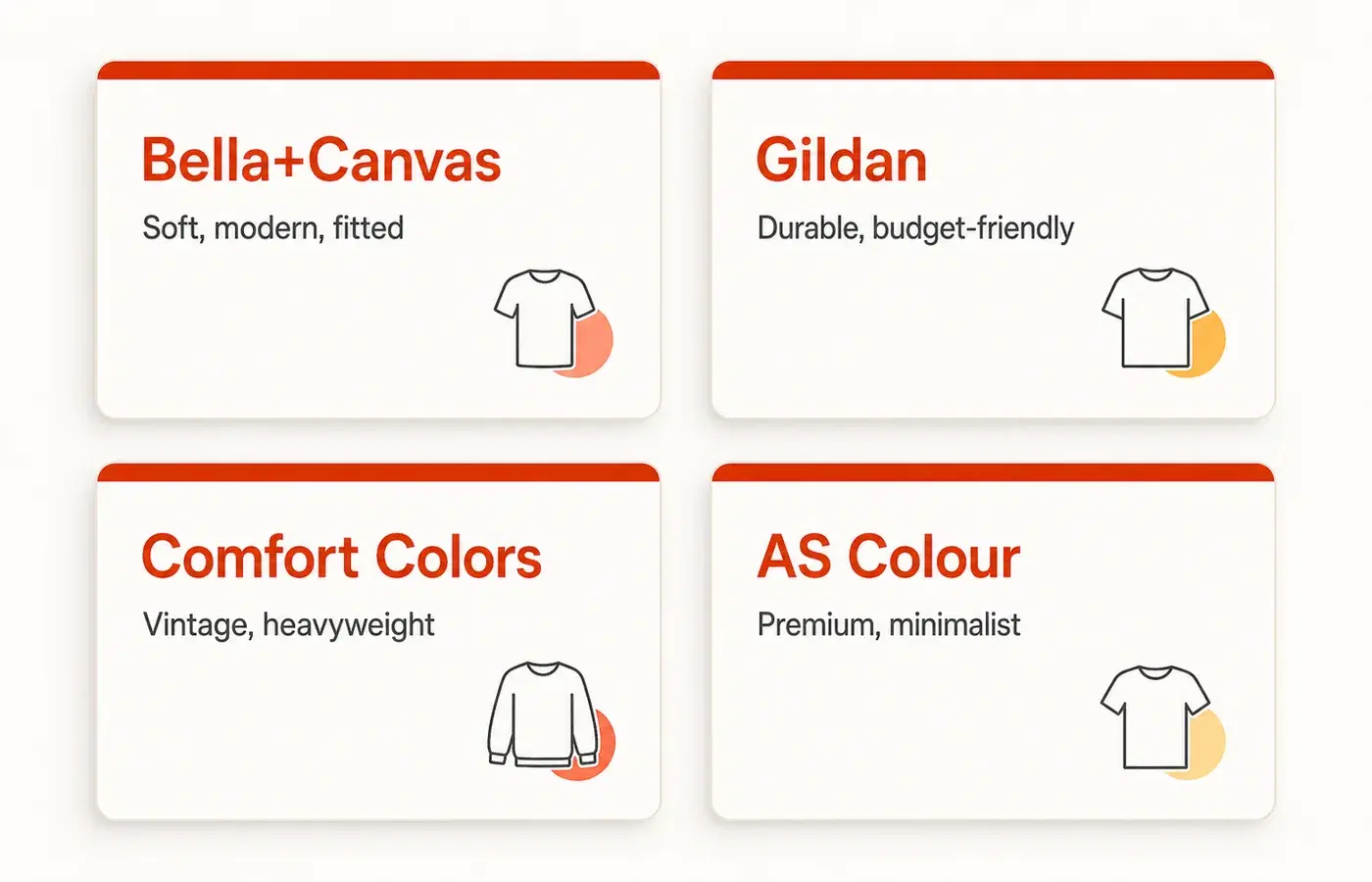
| Brand | Weight feel | Fabric | Fit | Best for | Price tier |
|---|---|---|---|---|---|
| Gildan | Midweight, sturdy | Cotton / blends, often open-end on budget lines | Boxier, classic | Budget merch, events, giveaways | $ |
| Bella+Canvas | Light–midweight | Airlume combed ringspun cotton | Fitted, runs narrow | Soft modern basics, detailed DTG | $$ |
| Next Level | Light–midweight | Ringspun, smooth | Tailored, flattering | Sleek modern fits, premium-feeling basics | $$ |
| Comfort Colors | Heavyweight | Garment-dyed ringspun cotton | Wide, relaxed | Vintage, lifestyle, spirit wear | $$$ |
| AS Colour | Mid–heavyweight | Ringspun, often organic | Modern, minimalist | Premium minimal basics, eco-positioned | $$–$$$ |
For the full head-to-head on the two most common starting picks, read our deep-dive comparison: Gildan vs. Bella+Canvas for clothing brands. This table is a summary on purpose — use the seven factors above to go deeper on any single brand.
Niche-to-Blank Decision Tree
Strip away the brand names and the decision gets simple. Find your niche, follow the line:
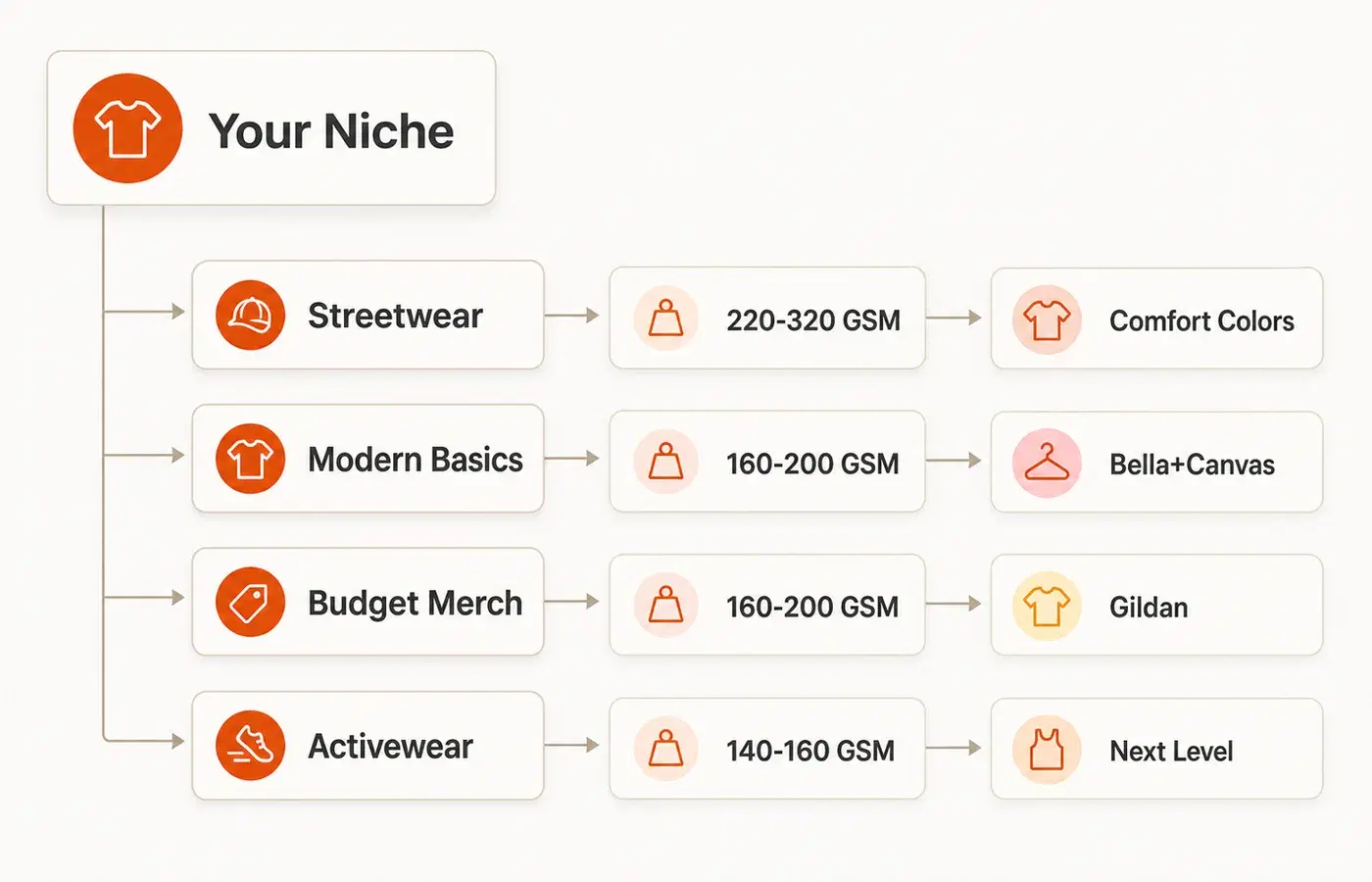
- Streetwear / oversized: heavyweight (220–320 GSM), boxy fit, often garment-dyed → Comfort Colors or premium heavyweight blanks.
- Premium minimalist basics: midweight ringspun combed cotton, tailored fit → AS Colour, Next Level, Bella+Canvas.
- Vintage / lifestyle: garment-dyed, relaxed fit, earthy colors → Comfort Colors.
- Budget merch / events / giveaways: durable midweight, classic fit, lowest cost → Gildan Heavy Cotton.
- Eco-positioned: organic or recycled fabric, ethical manufacturing → AS Colour, Stanley/Stella.
One more input before you lock it in: check what's actually trending in your niche. Heavyweight has been pulling the streetwear category upward for a few years, but aesthetics shift. Vaybel's AI Trend Finder surfaces which styles and weights are rising in your niche so you choose a blank for where demand is going, not where it was.
When to Graduate From Blanks to Cut-and-Sew
At some point you'll wonder whether you've outgrown blanks. Here's the honest answer: probably later than you think.
Blanks cap your differentiation, not your start. Custom cut-and-sew or private label lets you control fabric, fit, and labels completely, but it demands minimum order quantities, upfront capital, tech packs, and the experience to manage a manufacturer. That's the right move once a specific SKU has proven demand and your margin justifies the investment.
The anti-pattern is doing it backwards: buying boutique blanks or jumping to cut-and-sew before you've sold anything, because it feels "more legit." It isn't legit, it's risk. Validate with POD blanks first, let real sales tell you which products deserve a custom version, and graduate the winners. That's how you scale without gambling.
Frequently Asked Questions
What's the best blank t-shirt brand for a clothing brand? There isn't one universal answer, it depends on your niche, print method, and margin. For soft modern basics, Bella+Canvas or Next Level; for vintage and streetwear, Comfort Colors or a heavyweight blank; for budget merch, Gildan; for premium minimalist or eco lines, AS Colour. Use the seven-factor framework above to decide rather than copying a list.
What GSM should my t-shirt be? Midweight, 160–200 GSM, is the all-purpose default for retail basics. Go 220–320 GSM for premium streetwear and 140–160 GSM for activewear or lightweight summer tees.
Bella+Canvas or Gildan, which should I use? Short version: Bella+Canvas is softer, lighter, fitted, and prints beautifully on DTG; Gildan is heavier, more durable, and far cheaper, ideal for budget merch. Full breakdown in our Gildan vs. Bella+Canvas comparison.
Can I use any blank with print on demand? No. You can only use blanks your POD provider stocks, and on multi-provider platforms like Printify the exact garment can vary by fulfiller. Lock your provider and sample the SKU before publishing.
Is ringspun cotton worth it? Usually yes. Ringspun combed cotton gives a smoother surface that prints cleaner, which matters most for DTG and detailed designs. For rough budget merch, open-end cotton is acceptable.
Do I need premium blanks to start? No. Validate your designs on standard POD blanks first, then upgrade the products that prove they sell. Premium blanks day one is a common, expensive mistake.
DTG or DTF for my blank? Cotton and light colors lean DTG; blends, polyester, and dark garments lean DTF. DTG feels embedded and soft on cotton; DTF is more vibrant and works across more fabrics.
How do I know a blank will look right before ordering? Render your design on it with an AI mockup tool first, then sample only your finalist. It's faster and cheaper than sampling blind.
The Bottom Line
The right blank for your clothing brand isn't the most expensive one or the one a listicle ranked first. It's the one that's available in your POD catalog, matches your print method, fits your niche, and survives your margin, proven by seeing it on your design and sampling it, not by someone else's ranking.
Work the seven factors in order: confirm availability, set your weight, check construction, match your print method, dial in fit and color, manage return risk, and pressure-test the margin. Do that and you'll skip the most common beginner mistakes, the cheap poly blank that prints badly, the premium blank that kills your margin, the blind sample order that wastes a week.
The structural advantage today is speed: an AI-native founder can go from trend to a print-matched design, to a mockup across every candidate blank, to a published, margin-checked product, without guessing once. Vaybel closes that loop end to end, and as an official TikTok Shop App Store partner, it's built specifically for clothing brands selling where the buyers are.
Stop guessing which blank to use. See your design on any blank, match it to the right print method, and launch, free to start →