Find a niche worth testing.
A repeatable way to turn a clothing idea into a small, informed product test. Use this worksheet before committing to a whole collection.
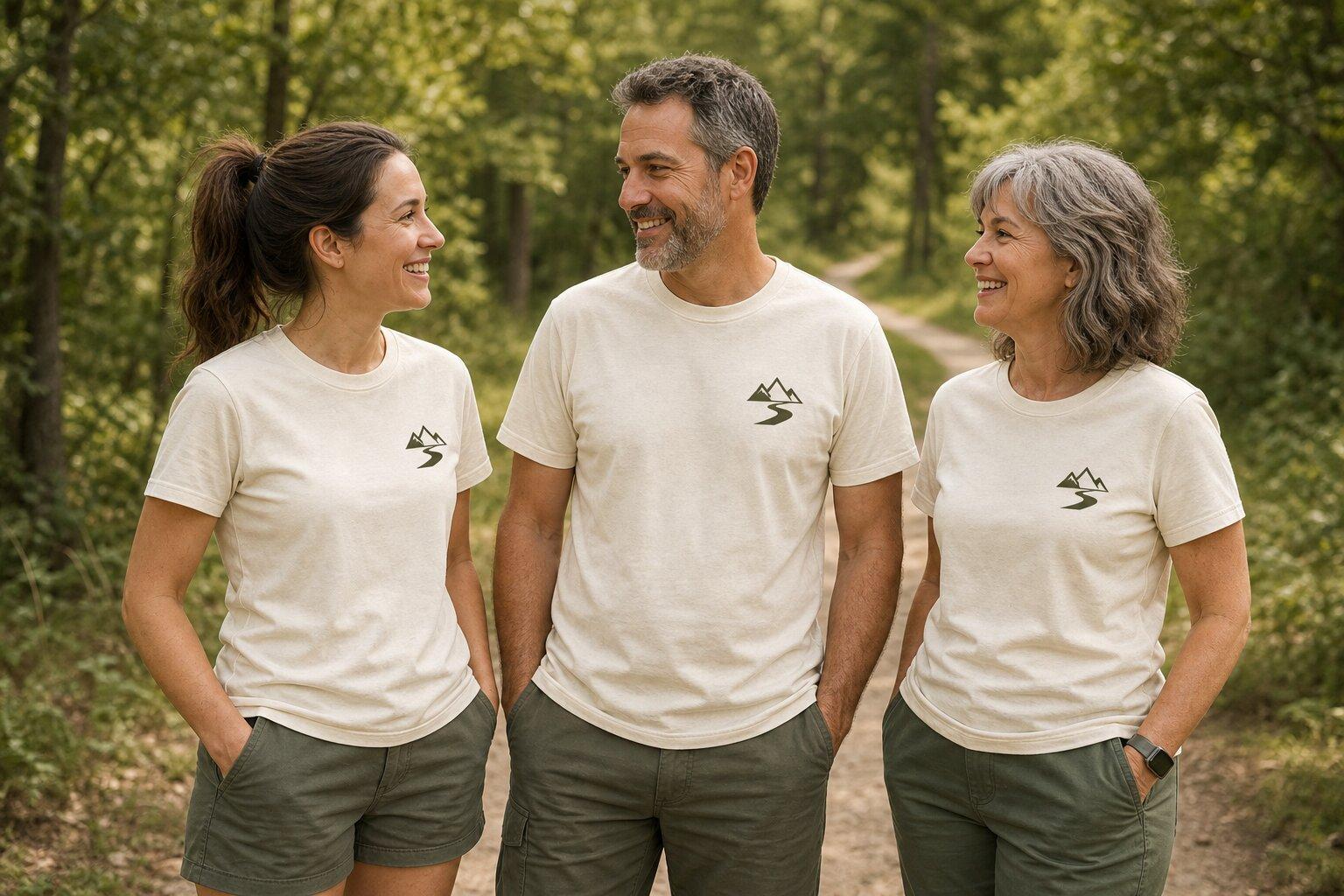
A worked starting point
From “outdoorsy” to a specific product.
Imagine a weekend walking club that wants an understated tee for local trail days. Start with a cream blank, one original landscape illustration, and a photo direction that feels relaxed and familiar.
The scene describes the creative idea. Your research still needs to answer who would choose it, what alternatives they have, and whether you can produce it at a workable price.
Your first hypothesis: this audience would prefer a wearable club-style graphic to a loud novelty slogan. Use the worksheet below to investigate that idea.
01
Start with a person, not an aesthetic
Write down who the shirt is for, when they would wear it, and what makes the idea meaningful to them. “Retro” describes a style. “A weekend trail runner who likes understated club tees” gives you a buyer and a design brief.
Your note: buyer · occasion · product · reason to choose it.
02
Separate attention from buying intent
Compare several related phrases in Google Trends using the same region and time range. Look at more than one year to spot seasonality. Then search the marketplace where you actually plan to sell. A popular video or a rising query is a reason to investigate, not proof that a shirt will sell.
Record the query, region, date range, source link, and the date you checked it.
03
Look at the product a buyer receives
Review comparable listings for the blank, fit, print placement, photographs, price, delivery estimate, and recurring review feedback. Look for a specific improvement you can make. Do not copy another seller’s artwork, slogan, or brand identity.
Your note: what buyers already get · what is missing · your proposed improvement.
04
Check the numbers before making a collection
Write down production cost, shipping, marketplace fees, discounts, and the selling price you can support. Include the cost of a sample and the time you spend making content. A design direction still needs a workable product and margin.
Choose one blank and a small number of designs so the first test stays affordable.
05
Run a small, dated test
Publish a focused set with consistent photographs and clear descriptions. Decide in advance what you will review: visits, saves, add-to-carts, orders, and customer questions. Use your own starting performance as a reference. If traffic is low, you have not yet learned much about demand.
Set a review date and decide whether to improve the offer, gather more evidence, or stop.
Make the idea concrete
Your niche research worksheet
Fill in what you know and leave a next step beside what you don’t. Your notes stay in this page until you leave or refresh. Download them before closing the tab.
Read a worked example: a walking-club tee
Illustrative planning example · 7 September 2026. This is a hypothesis with missing research clearly marked, not a verified trend.
- Buyer and occasion
- Weekend walkers in a local club; a tee for monthly trail days.
- Product and hypothesis
- Cream tee with a small original landscape. Hypothesis: members prefer a quiet club graphic to a novelty slogan.
- Search evidence
- Illustrative worksheet, written 7 September 2026. No live demand evidence collected. Next: compare “walking club shirt” and “hiking club shirt” in the US over 5 years; save the Trends URL and the date checked.
- Comparable products
- No listings reviewed yet. Next: record 5 relevant listings, including blank, full delivered price, and repeated fit or print feedback.
- Your difference
- A place-specific landscape drawn for our club, with a small chest print. Validate this preference with members first.
- Economics and test budget
- Hypothetical: $28 selling price − $12 printed cost − $4.50 shipping − $2.12 fees = $9.38 before ads, tax, returns, and overhead. $60 sample budget; $100 total initial test budget.
- Test and review date
- Ask 5 club members to compare 2 directions, then order a sample of the preferred one. Review on 21 September 2026. Record objections and preference reasons; these conversations are not sales evidence.
- Decision
- Investigate. Do not launch a collection until the evidence fields are completed and the sample is reviewed.
Keep your research with your designs.
Use Vaybel’s trend finder to explore ideas for your brand, then choose which ones to develop into products.