Find the spark for your next collection.
Explore apparel ideas through the lens of your brand and audience. Review the available signals, choose a direction, and turn it into a focused product brief.
7-day Starter trial · Card required · Cancel before billing
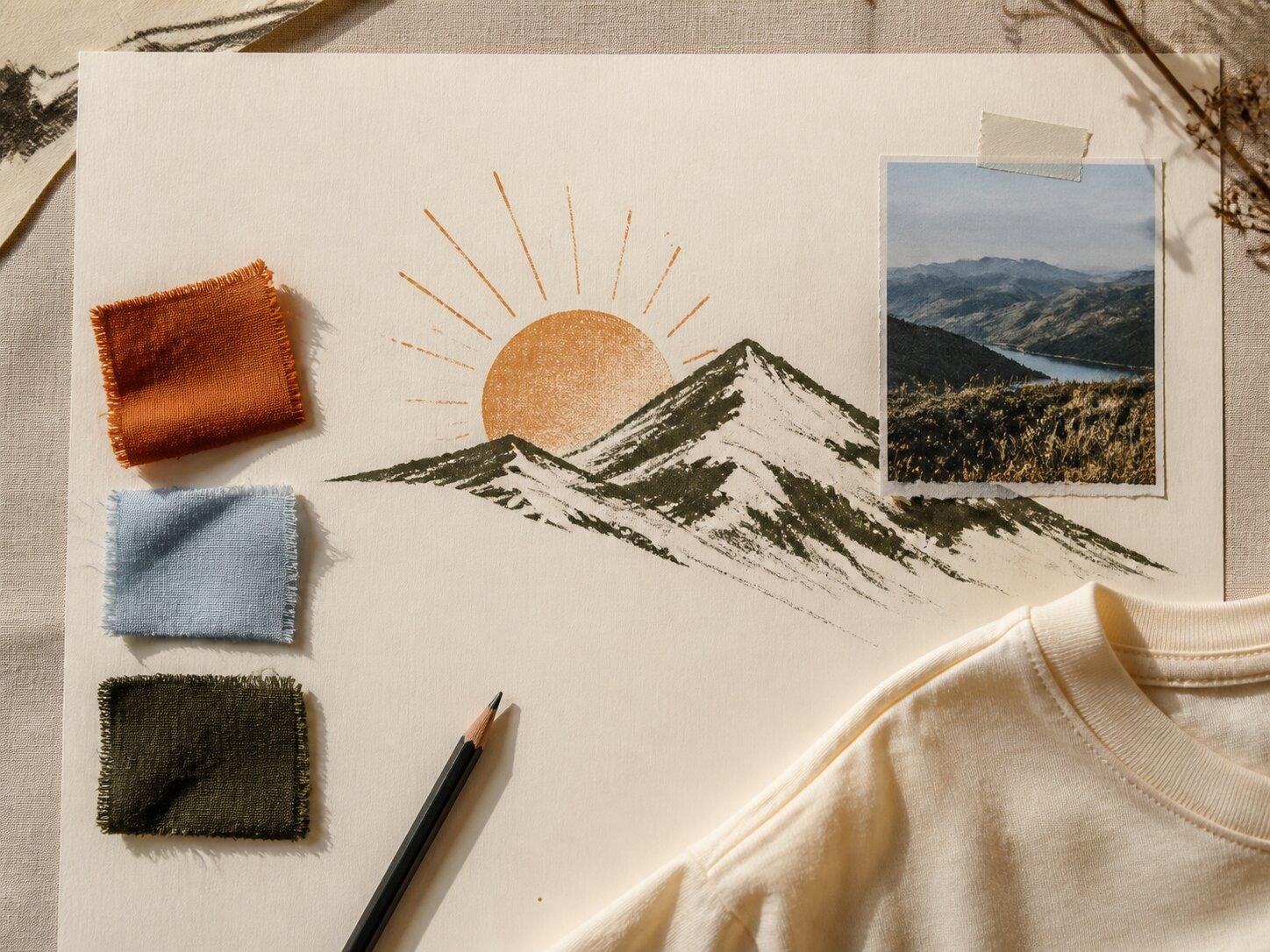 A direction worth exploring.
Begin with your audience
Use your brand context to narrow the directions worth exploring.
Look at the evidence
Review demand, competition, momentum, and seasonal context when available.
Make a small test
Develop a selected idea into a product concept you can review.
A trend is a starting point for a decision.
The useful question is whether an idea belongs in your collection. Look for an audience connection and a product you can make well.
Set the brand context
Describe the audience, interests, and visual direction of your clothing brand. A clear point of view helps you separate relevant opportunities from general attention.
Read the signal in context
Explore the available trend information and timing. Check the sources and freshness, and notice when evidence is missing. Interest in a subject is not the same as demand for a particular shirt.
Turn the direction into a brief
Choose the buyer, garment, and design idea. Develop a small product test and set a review date. Keep the research beside the brief so you can explain why you chose it.
Develop the designA direction worth exploring.In the walkthrough
A trend is a starting point for a decision.
- Set the brand context
- Read the signal in context
- Turn the direction into a brief
“Outdoor” is broad. Your buyer does not have to be.
A weekend walking club looking for understated tees suggests a different product from a technical trail-running audience. Start with that distinction, then choose an illustration, blank, and photo direction that belong together.
Use the niche research worksheetYour review checklist
- The idea has a clear connection to your audience.
- You have checked the source, region, timing, and missing data.
- The product brings an original perspective rather than copying another seller.
- You have a small test, a budget, and a date to review the result.
Before you get started.
Does a high score predict sales?
No. Scores help organize research signals. They do not account for every part of your offer, such as the quality of the garment, your photographs, pricing, or how you reach buyers.
Where does the research come from?
Vaybel uses Google Trends and Google Ads keyword data alongside your Brand DNA and seasonal context to develop product directions. Search interest and advertising competition are research signals; they do not measure sales of a specific product.
Can I use a trend as a design brief?
You can develop a selected direction into a product concept. Make the subject, buyer, blank, palette, and composition specific before moving into design generation.
What should I do when the evidence is thin?
Keep the idea as a hypothesis. Gather more evidence or run a small, affordable test. Avoid treating a low-traffic listing or a popular social post as a conclusive answer about demand.
A little idea. Something worth making.
Bring your product, your audience, and your point of view. Build the next part of your clothing brand with Vaybel.