
To spot clothing trends early, track four signal types before they converge: search intent, social velocity, commerce data, and culture. Fashion trend forecasting for an independent brand isn't about predicting further ahead than the enterprise. It's about reading cheap public signals weekly, then launching inside days instead of seasons.
Here's the part nobody selling you a forecasting subscription will say out loud: you don't need to predict better than Zara. You need to act faster than Zara.
That distinction decides everything about how you spend your time. Enterprise forecasting exists because enterprise production cycles are long. When a buyer commits to tens of thousands of units more than a year out, the forecast has to be right. So those brands pay for research that costs more than most independent labels earn in a year.
You have the opposite risk profile. With no inventory sitting in a warehouse, you can be wrong cheaply and often. That changes the winning strategy from predict correctly once to place more small bets, faster.
This guide covers three things: the signals worth watching, a weekly routine for reading them, and the filter that separates a real trend from one viral video.
Key Takeaways
- Enterprise fashion trend forecasting is built for long production cycles. Independent brands win on speed, not prediction accuracy.
- Four signal types matter: search intent, social velocity, commerce data, and culture. One source alone produces false positives.
- Pinterest reports 80% accuracy on its annual trend calls, and publishes them free.
- Velocity beats volume. A product going from 200 to 2,000 mentions matters more than one sitting at 50,000.
- Apply the three-source rule before committing: a signal appearing in only one place is usually noise.
What Fashion Trend Forecasting Actually Is
Fashion trend forecasting is the practice of spotting which styles, colors, silhouettes, and product categories will grow in demand. It reads early behavioral signals rather than current sales. Established agencies work years ahead so manufacturers can commit to fabric and production. Independent brands work in days.
That gap in timeframe is the whole opportunity. It's also why copying enterprise methodology will waste your time.
Consider what the industry standard actually sells. WGSN currently offers fashion trend forecasting for the 2026 to 2028 window, which is genuinely useful if you're locking a fabric order two years out. If you print on demand, that horizon tells you nothing you can act on this month.
Why "Trending Now" Lists Are Already Too Late
Most brand founders discover trends the same way consumers do: through a roundup post or a For You page that's already saturated. By then, the sellers making real margin designed for it weeks earlier.
The economics are unforgiving here. Early entrants set their own price. Late entrants compete on discount. The same design can carry a healthy margin in its first month and a thin one by its fourth. Nothing about the product changed. Only the number of people selling it did.
This is why "what's trending" content and trend forecasting are different jobs. If you want the current landscape, our breakdown of clothing brand trends for 2026 covers what's live right now. This guide is about seeing the next one before it gets there.
The Four Signals That Move Before a Trend Does
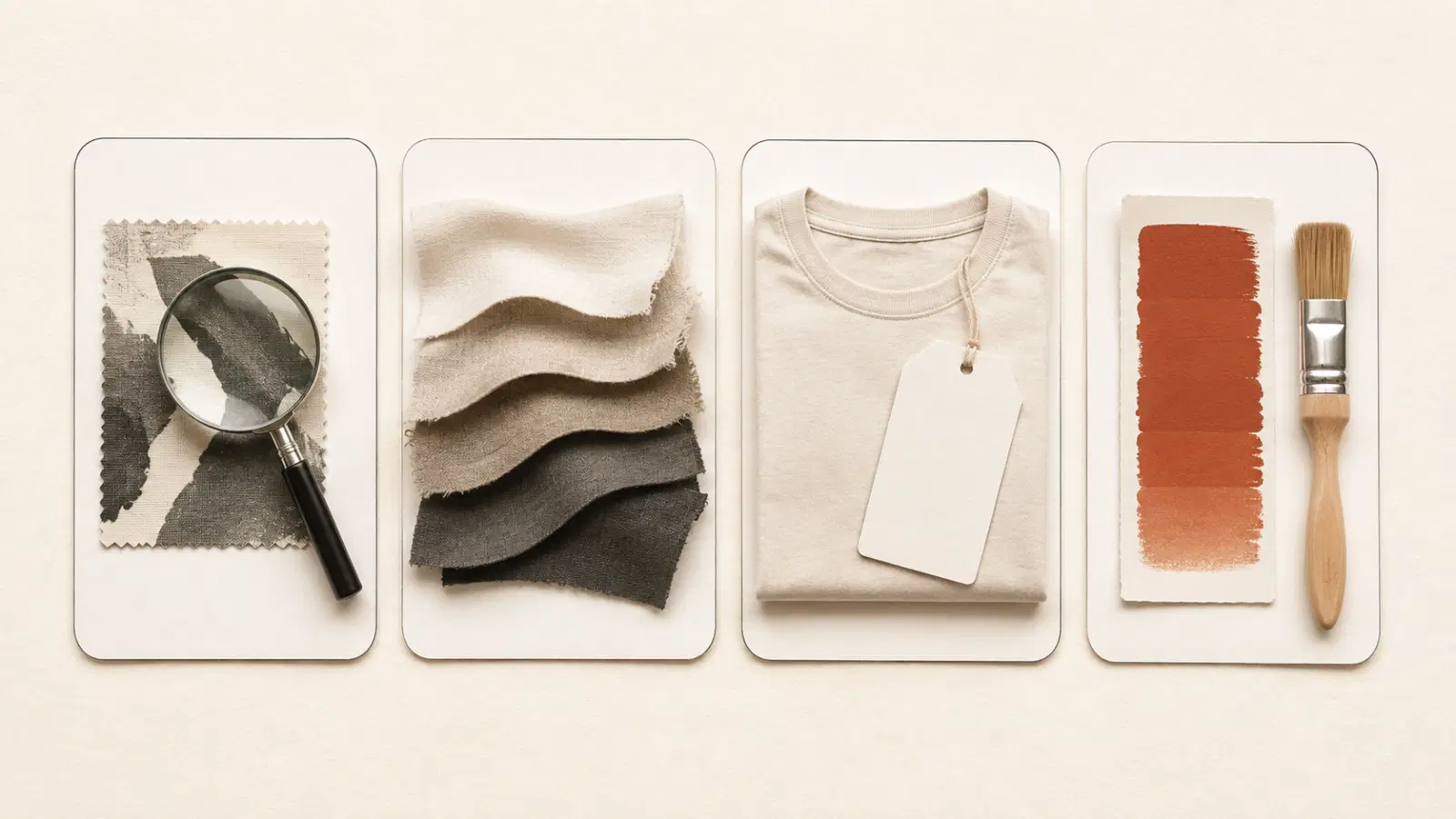
No single source predicts a trend. Fashion trend forecasting works because each of these captures a different moment in the adoption curve. Reading them together is what turns a hunch into a decision.
Search signal is intent that hasn't converted yet. When people search for something they can't easily buy, that gap is a product opportunity. Google Trends shows relative movement over time, which matters far more than absolute volume for this purpose.
Social signal is velocity before volume. A hashtag climbing from a small base is more actionable than one that's already enormous, because the large one is already contested.
Commerce signal is what's actually selling. This is the most reliable signal and the latest to arrive, which makes it excellent for confirmation and poor for discovery.
Culture signal sits upstream of all three. Music, sport, film, and subculture drive aesthetics months before those aesthetics show up in search data. This is the signal that can't be automated, and the one where your own taste and community membership genuinely matter.
Want to see what's moving in apparel right now? Our current trend watch tracks live opportunities across categories.
Free vs. Paid Fashion Trend Forecasting Tools
You don't need a paid subscription to forecast well. You need consistency and the discipline to check more than one source.
| Source | Cost | Signal type | Lead time |
|---|---|---|---|
| Google Trends | Free | Search | Weeks to months |
| Pinterest Predicts | Free | Search, culture | 6 to 12 months |
| TikTok Creative Center | Free | Social, commerce | Days to weeks |
| Reddit and Discord communities | Free | Culture | Months |
| Marketplace bestseller pages | Free | Commerce | Real time (late) |
| WGSN, Heuritech and similar | Enterprise pricing | All | 18 to 24 months |
Pinterest deserves specific attention because it's free and genuinely predictive. People use Pinterest to plan rather than to browse. Intent shows up there before purchase behavior does. The company states that "8 out of 10 trends we called came true three years in a row". It says it analyzes billions of monthly searches across two-year periods to filter seasonal noise.
Their Cherry Coded call shows the lead time on offer. Pinterest published the aesthetic as a prediction before cherry red became a mainstream fashion and interiors color story. That report costs nothing and comes out annually.
Want the signal scan handled for you? Vaybel's AI Trend Finder monitors these sources for apparel-specific movement, so you're reviewing shortlists instead of building spreadsheets.
How to Find Trending Products on TikTok Shop
TikTok Shop is where trend detection and commerce collapse into a single surface. You can see a product accelerating and see what it's selling for in the same session, which no other platform offers as cleanly.
Start in TikTok Creative Center, which is free and doesn't require an ad account. Under Trends, the Top Products view breaks down performance by region, category, and time window. Filter to Fashion and set the shortest window available.
The 7-day view is the one that matters. A 30-day leaderboard shows you what's already won.
Velocity Over Volume
The metric to watch is rate of change, not position. A product climbing several hundred places in a week beats one sitting comfortably near the top. The one at the top already has every seller's attention.
Apply the same logic to creator behavior. Watch for several unaffiliated creators featuring a similar product or styling within a short window. If none of them appear to be running the same campaign, that's organic spread rather than a single paid push.
Check the Keyword Insights tab too. It surfaces what people type into TikTok search, which is intent data on a platform most sellers treat as purely visual.
Bryan Guerra walks through product research tooling for TikTok Shop sellers.
Separating a Trend From One Viral Video
A single video doing enormous numbers is not a trend. It's one video.
The difference shows up in what happens next. A real trend produces imitation: other creators make their own version, search volume for the term rises, and related products start moving. A one-off spike produces views and nothing downstream.
Pacsun's Casey jeans show what a genuine wave looks like when a brand is positioned to catch it. Around Black Friday 2023, a smaller influencer posted about the low-rise, baggy denim style. Eleven thousand pairs sold on Black Friday alone, and the style went on to pass 100,000 pairs. The product was already listed and available when the moment arrived. That's the part worth copying.
If TikTok Shop is your primary channel, our guide to TikTok Shop automation covers connecting detection to publishing.
Your Weekly Trend-Spotting Workflow
Trend spotting fails when it's occasional. Thirty minutes on a fixed day beats three hours whenever you remember. Trends are about change over time, and you can't see change without a baseline.
- Check TikTok Creative Center (10 minutes). Fashion category, 7-day window. Note anything that moved sharply, not anything that's simply high.
- Cross-check in Google Trends (5 minutes). Search the term or aesthetic. You want a rising line, not a high flat one. Keep your region and date range consistent every week.
- Scan two communities (5 minutes). Pick subreddits or Discords where your actual customers talk. You're looking for language and references appearing more often, not for product recommendations.
- Check marketplace bestsellers (5 minutes). Etsy and Amazon confirm whether money is already moving. Heavy saturation here means you're late.
- Log everything (5 minutes). Keep a running document with the date, signal source, and what you noticed. This is the step people skip, and it's the one that makes the whole routine work.
That log is what turns scattered observations into forecasting. Week four is when you start seeing which signals in week one actually went somewhere, and your pattern recognition compounds from there.
How to Tell a Real Trend From Noise
Most trend-spotting advice stops at finding signals. The expensive mistake isn't missing a trend, it's committing to a fake one.
The three-source rule. A signal appearing in one place is noise. Appearing in two is worth watching. Appearing in three different signal types, say search plus social plus commerce, is worth designing for. This single rule will prevent most bad bets.
The trend versus fad test. Ask whether the thing connects to something durable: an identity, a community, a practical need. Trends attach to how people see themselves. Fads attach to a moment and vanish with it. Gorpcore connects to a genuine shift in how people dress for the outdoors, whereas a meme shirt connects to one week of internet.
Know when not to chase. Some signals are traps regardless of strength. Anything involving a logo, a character, a lyric, or a team name carries real intellectual property risk. Trends already saturated by large sellers leave you competing on price. And seasonal windows close hard, which is why timing matters as much as selection when you're planning a Q4 print-on-demand push.
Once a signal clears these filters, the next question is economic rather than cultural. Our guide to finding profitable print-on-demand niches covers the cost sheet and testing side, which is where trend spotting hands off to validation.
Why Speed Beats Prediction
Here's what changes once you accept that you can't out-forecast the enterprise. Fashion trend forecasting is only half the job.
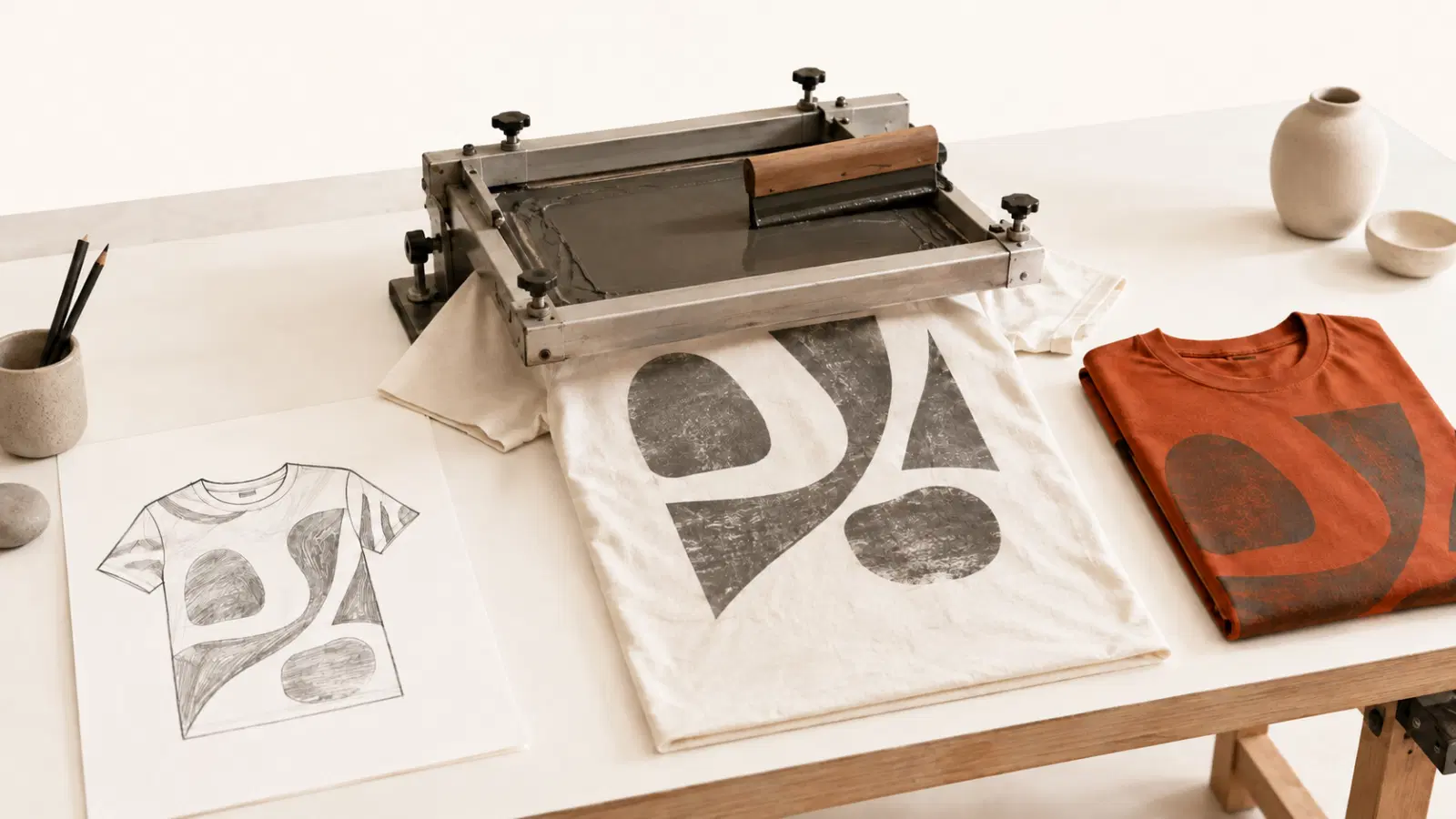
The value of spotting a trend early is capped by how fast you can act on it. Detecting a signal on Monday means nothing if your design, mockups, and listings take three weeks. The founders capturing early margin aren't necessarily seeing more than you. They're converting what they see into live products while the window is open.
This is why the detection routine and the production pipeline have to be considered together. A brand that checks signals monthly but launches in two days will consistently outperform one that checks daily and launches in a month.
Portland Leather Goods demonstrates what compressed execution looks like when the pieces are in place. The brand generated $1 million in sales in 20 days on TikTok Shop through a coordinated affiliate push, according to Modern Retail. The signal reading was the smaller half of that; the ability to move immediately was the larger half.
The infrastructure question matters more than it used to. The print-on-demand market was valued at $12.96 billion and is projected to reach $102.99 billion by 2034, according to Precedence Research data cited by Printful. More sellers are entering every year. That makes the gap between spotting and shipping the place where your remaining advantage lives.
Compressing that gap is what Vaybel is built for. Generate a design from a description, produce lifestyle mockups without a photoshoot, and publish optimized listings to TikTok Shop, Etsy, and Shopify from one workflow. The trend you spotted on Monday can be live the same week.
Fashion Trend Forecasting FAQs
What is fashion trend forecasting?
Fashion trend forecasting is the practice of predicting which styles, colors, silhouettes, and product categories will grow in demand. It reads early behavioral signals such as search, social, and commerce data rather than current sales. Agencies forecast years ahead; independent brands forecast in weeks.
How do you spot clothing trends early?
Track four signal types every week: search intent, social velocity, commerce data, and culture. Log what you see on a fixed day, because without a baseline you can't tell movement from noise. Then commit design time only when a signal shows up in three of the four.
What are the best free trend forecasting websites?
Four cover most of it. Google Trends handles search movement, TikTok Creative Center shows social and commerce velocity, Pinterest Predicts publishes an annual forecast, and Reddit or Discord communities carry the culture signal that none of the others capture. Together they replace most of what a paid subscription sells an independent brand.
How do I find trending products on TikTok Shop?
Open TikTok Creative Center, go to Trends, then Top Products. Filter to Fashion and pick the shortest available time window, since a 30-day leaderboard mostly shows you what other sellers have already crowded into. Watch rate of change rather than rank. The Keyword Insights tab is worth a look too.
How far ahead can you predict fashion trends?
It depends on the signal. Culture and search can lead demand by months, whereas commerce data only confirms a trend once it's already selling and the easy margin is gone. Enterprise agencies sell multi-year horizons. A print-on-demand brand rarely needs more than a few weeks of warning.
Start Spotting Trends This Week
Fashion trend forecasting stops being intimidating once you stop trying to do it the way enterprises do. You're not building a two-year outlook. You're building a weekly habit that catches movement while it's still cheap to act on.
Five things to take away:
- Speed beats accuracy for independent brands. Small, fast bets outperform one confident prediction.
- Read four signal types: search, social, commerce, and culture. Any one alone will mislead you.
- Watch velocity, not volume. Rate of change is the early indicator; absolute size is the late one.
- Apply the three-source rule before you commit design time to anything.
- Log weekly. Pattern recognition compounds, and it only works with a baseline.
Start this week. Open TikTok Creative Center, filter to Fashion on the 7-day window, and write down three things that moved. Next week, check whether they kept moving. That's forecasting, and you've now done it twice.
Ready to close the gap between spotting a trend and selling it? Good fashion trend forecasting only pays off when you can act on it. Start your free trial and take a design from idea to live listing this week.