Last updated: 2026-06-29
You can start a clothing brand with no experience in 2026 because the skills that used to gate the industry are now automated or done for you. Print-on-demand handles manufacturing, AI handles design and product photos, and TikTok Shop brings buyers to you without an ad budget or an audience. What's left is the part no software can replace: your taste, your niche instinct, and your willingness to show up consistently.
Here's how out of step most advice still is. The biggest, best-ranked guide to this exact question opens with "develop your fashion design skills" as step one. For a beginner who just admitted they can't draw, that's the door closing, not opening. The honest 2026 answer is the opposite: you don't develop those skills first, because you no longer need them at all.
That matters because the thing stopping most people was never money. It's the quiet belief that they're not qualified. "I can't draw. I can't sew. I've never sourced a factory or written a product listing in my life." Every one of those was a real barrier ten years ago. Today, not one of them is a prerequisite.
The proof the de-skilled path works at scale already exists. Portland Leather Goods generated roughly $1 million in TikTok Shop sales in just 20 days by leaning on affiliate creators instead of its own brand account, according to Modern Retail's 2025 case study. The brand didn't out-spend anyone. It let other people make the content and only paid when a sale happened. That structure, not a fashion degree, is what a beginner can copy.
This guide walks the exact path: pick a model that needs no manufacturing knowledge, find a niche without market research, create products without design or photography skills, sell on a channel that finds buyers for you, and grow from data instead of intuition you don't have yet. Vaybel is an official TikTok Shop App Store partner, and the AI tools referenced below are part of that certified integration.
Want to see the trend-to-listing pipeline before you read the steps? Explore the product workflow →
Key Takeaways
- "No experience" used to mean six missing skills (design, photography, sewing/manufacturing, copywriting, video, and marketing). In 2026, five are automated and the sixth is built into TikTok Shop's discovery model.
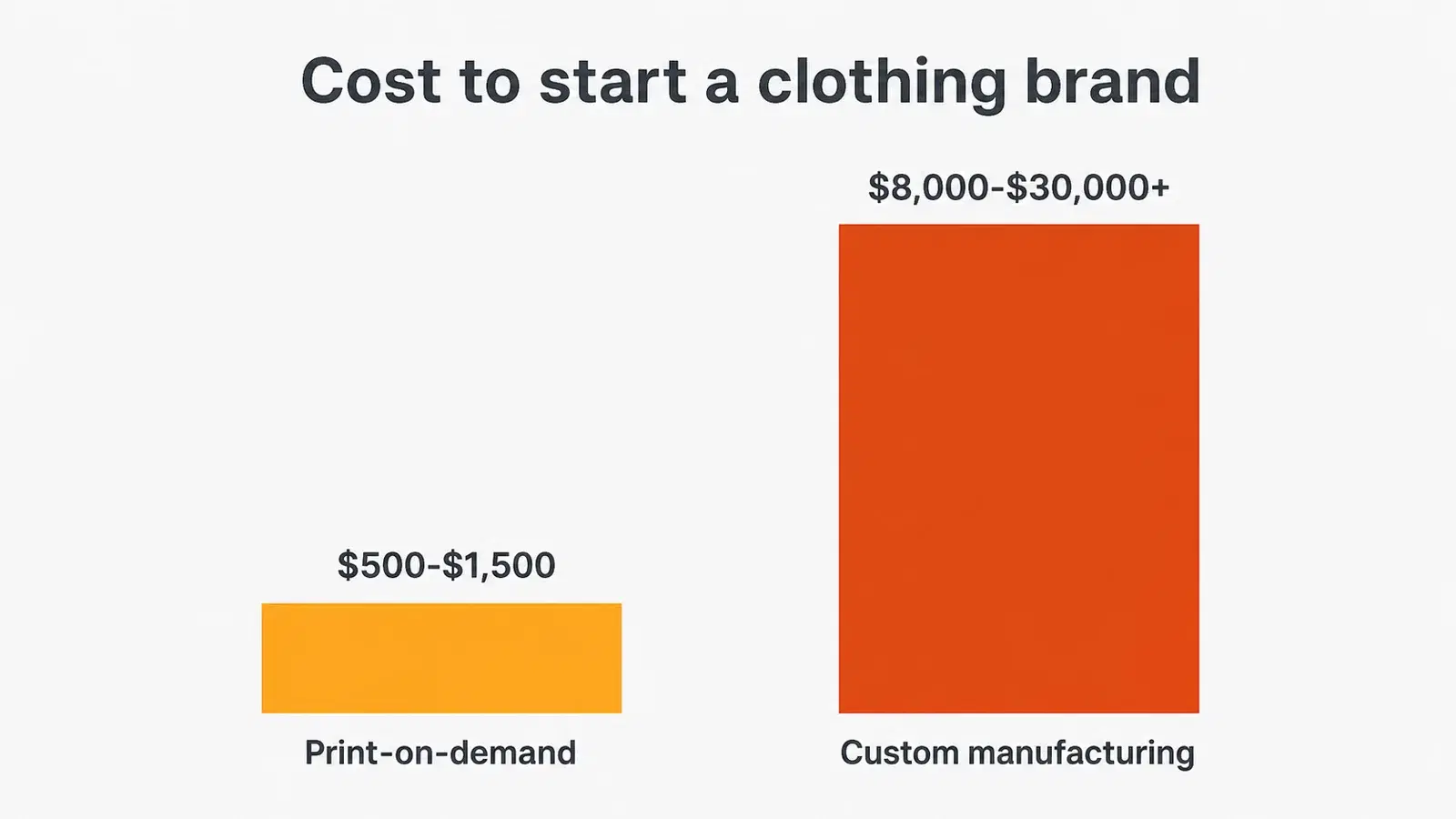
- Print-on-demand is the beginner-proof model: products are made and shipped after a customer buys, so there's no inventory, no factory, no MOQ, and no sewing. Beginner startup costs run roughly $500–$1,500 versus $8,000–$30,000 for small-batch custom production.1
- AI design generation and AI mockups remove the two most-cited blockers (you can't draw, you can't photograph a product you don't own), collapsing what used to take days of work into minutes.
- TikTok Shop is the launch channel because it's discovery commerce: it has a zero-follower seller requirement, strong conversion (products under $30 routinely clear 5%), and US GMV tracking past $23 billion in 2026, so the algorithm and creators bring buyers to a brand with no audience.2
- Creator affiliates are the no-experience marketing model: you pay commission only when a sale happens, 40–60% of sampled creators typically post, and product sampling returns an estimated 5–10x.3
How to start a clothing brand with no experience, in six steps:
- Choose a beginner-proof business model. Use print-on-demand so products are made and shipped only after a customer buys, with no inventory, no factory, and no sewing.
- Find a niche without market research. Read the communities where your buyers already spend time and design for a specific audience.
- Create your product without design or photography skills. Generate print-ready designs with AI and put them on virtual models with AI mockups.
- Pick a channel that finds buyers for you. Launch on TikTok Shop, where the algorithm and creators bring buyers to you.
- Get customers without being a marketer. Recruit creator affiliates who make the content and only earn when they sell.
- Grow from data, not experience. Double down on the designs and creators the numbers show are already working.
In this guide:
- Can you really start a clothing brand with no experience?
- Why most "no experience" guides quietly require experience
- Step 1: Choose a beginner-proof business model
- Step 2: Find a niche without market-research experience
- Step 3: Create products without design or photography skills
- Step 4: Pick a channel that finds buyers for you
- Step 5: Get customers without being a marketer
- Step 6: Grow from data, not experience
- Mistakes that trip up first-time founders
- FAQ
Can You Really Start a Clothing Brand With No Experience? (Yes)
Yes. You don't need a fashion degree, design training, or any retail background to launch a clothing brand in 2026. Most successful clothing founders started with no formal industry experience and learned the business as they built it, a point NerdWallet's guide to starting a clothing line makes plainly. Experience was never the real moat. It was a proxy for a handful of specific skills, and those skills have been unbundled from you.
Think about what "experience" actually meant. It meant you could sketch a design, get it manufactured, photograph the result, write copy that sells, film content, and find an audience. Six skills, any one of which could stop a beginner cold. The shift that makes this guide possible is simple: five of those six are now handled by software, and the sixth is solved by where you choose to sell.
Here's the honest version, laid out plainly.
| The "experience" you think you need | Why it used to be a barrier | How it's solved now |
|---|---|---|
| Drawing or graphic design | Hire a designer or master Illustrator | AI design generation: a prompt becomes a print-ready file |
| Product photography | Buy a sample, rent a studio, hire a photographer | AI mockups: virtual-model imagery, no product needed |
| Sewing, patterns, manufacturing | Learn the craft or source a factory with high minimums | Print-on-demand: made and shipped for you, per order |
| Copywriting and listing SEO | Learn ecommerce copy from scratch | AI listing generation: optimized titles and descriptions |
| Video production and being on camera | Film, edit, and build a following first | AI product video: shoppable clips with no filming |
| Marketing and ad-buying | Run paid ads, build an audience before selling | TikTok Shop discovery plus creator affiliates |
The takeaway to hold onto: starting a clothing brand used to require six skills most beginners don't have. Today, the only inputs left are your taste, your read on a niche, and consistency. Those are the parts experience couldn't give you anyway.
Why Most "No Experience" Guides Quietly Require Experience
Search this exact question and you'll get long, confident articles that promise no experience needed, then walk you straight into work that very much needs it. It's worth naming the trap, because spotting it saves you the most common beginner detour: building like a traditional fashion label when you don't have to.
The clearest example sits at the top of the results. The most authoritative guide runs 14 steps and starts with "develop your fashion design skills," then moves through sourcing fabric, setting up manufacturing, planning seasonal collections, and pitching your line to retailers. Every one of those steps assumes capital, lead time, and craft a first-timer doesn't have. It's a genuinely good guide, for someone building a label the 2010 way.
Even the print-on-demand guides leave the hardest parts to you. The leading POD walkthrough name-drops TikTok Shop in a list of channels and suggests using ChatGPT to brainstorm a brand name, then hands you back a manual design tool and tells you to order and test samples. The two blockers that actually stop beginners, designing without design skills and getting product photos without a product, go unanswered.
Here's the pattern across the whole genre: they tell you what to do and skip the part where you have no idea how to do it. The rest of this guide is built the other way around. Every step names the skill you're missing and the tool that removes it, so "no experience" stays true from the first step to the first sale.
Step 1: Choose a Beginner-Proof Business Model
Your business model decides how much experience you actually need, so choose it first. Get this right and the rest of the build gets dramatically easier. Get it wrong, by jumping straight to bulk manufacturing, and you've signed up for the exact knowledge and capital you were trying to avoid.
There are three models worth knowing, and only one is genuinely beginner-proof.
Print-on-demand (recommended). Your products are manufactured and shipped only after a customer pays. No inventory sits in your closet, no factory negotiation, no minimum order quantities, and absolutely no sewing. You design it, list it, and the print partner handles the rest. You keep your own brand and your own designs, which is what separates a real brand from reselling. For a first-time founder, this is the path.
Dropshipping. Also zero inventory, but you're reselling someone else's existing products under a thin layer of branding. It's a fine way to learn ecommerce mechanics, but it's a weak way to build a brand people remember. Worth knowing, not worth leading with.
Private label and bulk manufacturing. This is what most "no experience" articles quietly steer you toward, and it's the wrong first move. It requires capital for minimum orders, the ability to vet factories, and tech-pack literacy, the precise experience the title promised you don't need. Grow into it later, after you have proof.
Here's the quick comparison.
| Model | Experience needed | Upfront cost | Brand control |
|---|---|---|---|
| Print-on-demand | Low | $0 inventory, ~$500–$1,500 to start1 | High (your designs) |
| Dropshipping | Low | Near zero | Low (others' products) |
| Private label / bulk | High | $8,000–$30,000+ | High but capital-heavy |
The verdict: a print-on-demand clothing brand is the best model for beginners. It's the only one that lets a complete beginner own a real brand with no technical experience and almost no upfront risk. Everything else in this guide assumes you've chosen it.
Want to skip the guesswork on tooling? See how the POD workflow runs end to end →
Step 2: Find a Niche Without Market-Research Experience
Before you design a single thing, decide who you're designing for. This is where beginners either set themselves up to win or quietly doom the whole project, and it has nothing to do with an MBA or a market-research budget.
The mistake is starting from "I think this design is cool." The fix is starting from a specific audience with a specific aesthetic they already spend money on. A niche gives the algorithm someone to show your product to and gives creators a clear reason to post about it. "Funny graphic tees" is not a niche. "Minimalist gym wear for women who lift" is.
You don't need a research firm to validate this. You need to read the room where your buyers already are. Spend an hour in the relevant subreddits and TikTok comment sections. Watch which aesthetics are rising, which products people tag friends in, and which complaints come up again and again. Saves and comments are demand signals you can read for free.
This is also where an AI trend finder earns its keep. Instead of guessing, Vaybel's AI Trend Finder surfaces rising aesthetics and product angles before they saturate, which gives a beginner the one thing experience normally provides: a read on demand. You're designing for a market that's already forming, not for your own taste in a vacuum.
One reality to design around: women drive an estimated 70–75% of TikTok Shop purchases, and the core demographic skews 18–34.4 If you're undecided between audiences, a women's casual or co-ord piece is the statistically safer first bet. You can always expand once something works.
A quick word on what to avoid. Skip oversaturated generic graphic tees, the category is a bloodbath and impossible to stand out in. And never lift trending designs or anything IP-adjacent. Platforms remove infringing listings fast, and a takedown early can hurt your shop's standing before you've made a sale.
Step 3: Create Your Product Without Design or Photography Skills
This is the section where "I have no experience" usually becomes "I give up." You can't draw, you've never used design software, and you certainly can't photograph a product that doesn't physically exist yet. These are the two hardest blockers for a beginner, and they're now the two easiest to solve. Pay close attention here.
Design Without Being a Designer
The free path everyone mentions is Canva or Photopea, and it's real. The problem is that those tools still require taste and a working knowledge of design, the exact thing you said you don't have. Staring at a blank Canva canvas is its own kind of paralysis.
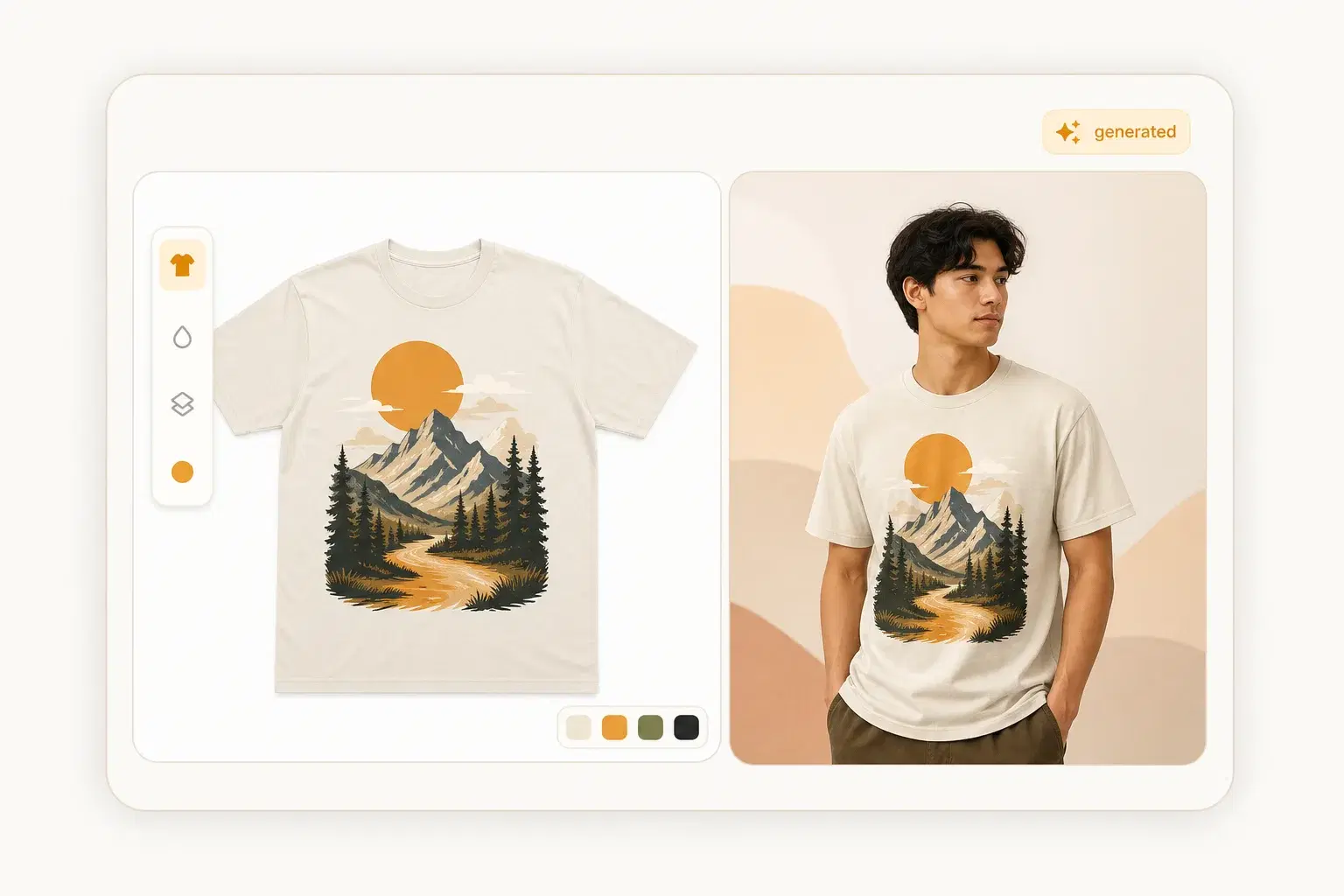
The faster path is AI design generation. With Vaybel's AI Design Generator, you describe what you want in plain language and get back a print-ready file: correct dimensions, full print resolution, and a transparent background, ready to drop onto a product. No drawing, no software learning curve, no designer to hire. Generate five to ten variations of an idea and let the market tell you which one wins instead of betting everything on a single guess. This alone collapses what used to be weeks of work or hundreds of dollars in freelancer fees.
Get Product Images Without Owning the Product
Here's the blocker nobody warns beginners about: with print-on-demand, you don't have a physical product to photograph, and even if you did, you've never shot or styled product photography. Traditionally that meant ordering a sample, renting a studio, and hiring a photographer before you'd earned a cent.
AI mockups erase that entire step. Vaybel's AI Mockup Generator places your design on virtual models, so you get scroll-stopping product imagery with no sample, no camera, no studio, and no styling experience. A few practical rules for the images themselves: use three to nine images per listing, shoot square (1:1) for the grid and 3:4 for the product page, and make sure your first image reads clearly at thumbnail size, because that thumbnail is what decides whether anyone taps.
Ready to test it? Design your first product free, no experience needed →
Write Listings That Convert Without Ever Writing Copy
The last micro-skill in this step is the product listing, and "I don't know what to write" stops people just as cold as a blank design canvas. Vaybel's Channel Merchandiser and AI listing generation produce optimized titles and descriptions, run compliance checks, and format everything for the platform automatically. If you want the one-line version of listing SEO: put your main keyword in the title, write benefit-led bullets, and pick the right category. The tools handle the rest.
The practical benefit is keeping the design, images, and listing draft in one workflow. Start with one product and measure the time you spend on generation, revisions, and review before planning a larger collection.
Step 4: Pick a Channel That Finds Buyers for You
Most guides tell beginners to "build a Shopify store" first. For someone with no audience and no ad experience, that's the single worst piece of advice in the genre. A brand-new standalone store is a shop on an empty street. You can build the most beautiful storefront in the world, and if nobody knows it exists and you can't afford ads, nobody walks in.
The answer for a no-experience founder is discovery commerce, and right now that means TikTok Shop. Instead of waiting for people to search for you, the algorithm pushes your product into feeds and creators put it in front of their audiences. The buyer finds the product mid-scroll. You don't need to already have followers, and you don't need to know how to run ads.
The numbers back the choice. TikTok Shop's US GMV is tracking past $23 billion in 20262, it converts well above traditional ecommerce (products under $30 routinely clear 5%, versus the 2–4% typical elsewhere)5, and crucially, it has a zero-follower requirement to open a seller account. You can start selling with an audience of nobody. Vaybel is an official TikTok Shop App Store partner, so listings publish through a certified integration rather than a workaround.
This doesn't mean you'll never own a store. It means you start where the buyers already are. Once you have proof that a product sells, adding a low-cost Shopify Starter store as your owned home base makes sense. The order matters: prove demand on the discovery channel, then build the house. As a quick mental model, use TikTok Shop for launch and discovery, Etsy for evergreen search demand, and Shopify as the home base you grow into later.
Step 5: Get Customers Without Being a Marketer
Marketing is where "no experience" feels most disqualifying. You've never run an ad, you don't have a following, and the thought of being on camera makes you want to close the laptop. Good news: the two highest-leverage growth channels for a beginner require none of that.
Creator Affiliates: Marketing Other People Do for You
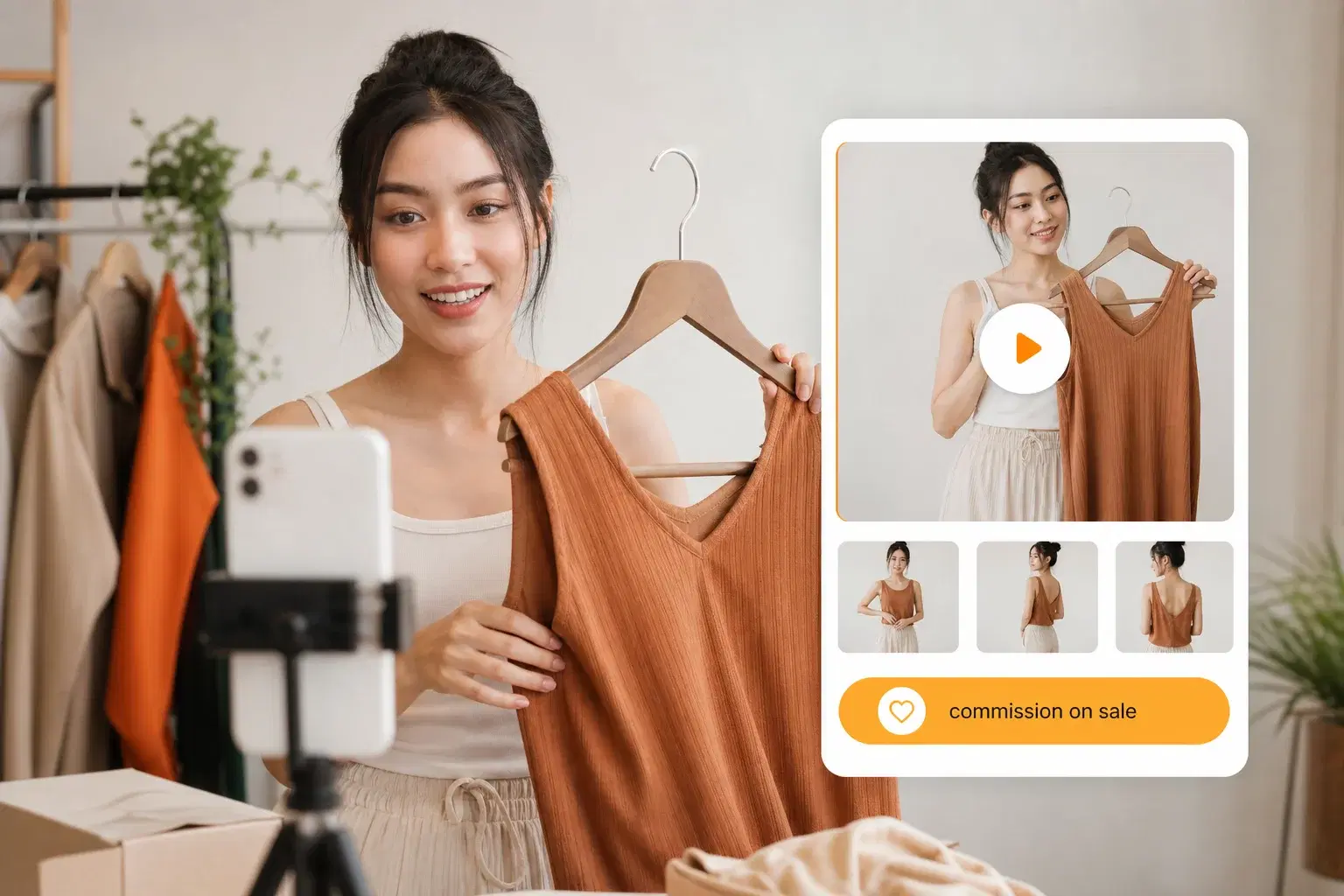
Affiliate creators are the most beginner-friendly marketing model that exists, because the creator makes the content and does the selling, and you only pay a commission when a sale actually happens. There's no upfront ad spend to lose and no campaign to manage badly. It's marketing on a pay-for-results basis.
That's exactly the structure behind Portland Leather Goods' roughly $1 million in 20 days on TikTok Shop, per Modern Retail: an affiliate blitz rather than a brand-account grind. The same engine, at small scale, is how Halara opened its US TikTok Shop in late 2023 and reached an estimated $1.7 million in its first full month by mobilizing thousands of creators, according to TikTok analytics platform EchoTik. Neither brand is a Vaybel customer; both are cited only to show what the model makes possible.
Your starter playbook is small and doable: recruit five to ten micro or nano creators, send free product samples, offer 15–20% commission, and give them a simple one-page brief. Expect 40–60% of sampled creators to actually post, and product sampling tends to return an estimated 5–10x.3 Find creators through the TikTok Creator Marketplace or by searching your niche hashtags and sending a short DM.
Shoppable Content Without Filming Yourself
The other engine is short-form video, and you do not have to be the one on camera. Vaybel's AI Product Video Generator and Shorts Creator turn your designs and mockups into shoppable videos with no filming, no editing skill, and no on-camera presence. Aim to post one to three a day. This matters because listings with video earn an estimated 2–3x more impressions in the Shop tab, and the large majority of consumers say they prefer to learn about a product through short video.
If you want a content menu that reliably sells clothing, lean on four formats: try-on clips, styling videos ("five ways to wear this"), behind-the-scenes brand-story content, and trend-reactive posts. The AI tools can spin up variations of each so you're feeding the algorithm volume without burning out.
Step 6: Grow From Data, Not Experience You Don't Have
Here's the hidden advantage of starting now: you don't need years of gut instinct when the data tells you what's working in real time. Experienced founders rely on intuition built over a decade. You get to skip straight to the scoreboard.
Vaybel's Shop Insights shows which SKUs convert, which creators drive the most GMV, and where your money is actually coming from. That turns growth into a simple loop instead of a guessing game: post content, watch for a demand signal, run a small drop, and produce only what's already selling. Because production happens after the sale, this loop is nearly risk-free, you're never sitting on inventory you bet wrong on.
It also tells you when and where to spend your first real dollars. The order that works: lock in a domain, register the business once volume justifies it, then put paid spend behind creator content that's already winning organically (Spark Ads). Spend follows proof, never the other way around. A beginner who reinvests only into validated winners can out-maneuver a more experienced founder who's spending on hunches.
The opportunity underneath all of this is not small. The global apparel market is projected to clear roughly $2 trillion in 2026, per Shopify's industry data. You don't need a fraction of a fraction of that to build a real business, you need one product that resonates with one niche, found through data instead of guesswork.
Mistakes That Trip Up First-Time Clothing Founders
Most no-experience launches don't fail from bad luck. They fail from a handful of predictable, avoidable mistakes. Sidestep these and you're ahead of most of the field.
- Jumping to bulk manufacturing to feel "legit." Ordering a big inventory run re-introduces the exact cost and expertise you avoided with print-on-demand. Stay lean until the data demands more.
- Designing a full collection before validating one product. Launch one to three pieces, learn what sells, then expand. A 30-piece launch is 30 untested bets.
- Copying trending or IP-adjacent designs. It feels like a shortcut and ends in listing removals. Build something that's actually yours.
- Perfecting a logo and website before testing demand. Nobody cares about your logo until your product proves people want it. Polish later.
- Trying to learn every skill at once. Automate the skills that don't differentiate you (design execution, photography, copy, video) and spend your energy on niche and taste.
- Defaulting to one-size cuts. Sizing-driven returns hurt both your margins and your shop's health score. Offer a real size range from day one.
Frequently Asked Questions
Can you start a clothing brand with no experience?
Yes. The technical skills that used to require experience, design, photography, copywriting, video, and manufacturing, are now automated or handled by print-on-demand partners. What you still bring is taste, a sense for your niche, and consistency. Most successful clothing founders started with no formal training.
Do I need to know how to sew or design?
No. Print-on-demand means a partner manufactures and ships each item after a customer buys, so you never touch a sewing machine. AI design generation turns a written prompt into a print-ready file, so you don't need to draw or use design software either.
Do I need product photography skills?
No. AI mockups place your design on virtual models, giving you professional-looking product images without owning a sample, renting a studio, or hiring a photographer. This removes one of the biggest hidden blockers for beginners.
How much does it cost to start a clothing brand with no experience?
With print-on-demand, beginners typically spend roughly $500–$1,500 to start, versus $8,000–$30,000 for small-batch custom production. If you sell directly on a marketplace like TikTok Shop and lean on free organic content plus pay-on-performance affiliates, you can launch for far less. For a near-zero approach, see our guide on starting a clothing brand with no money.
Do I need a business license to start?
Not on day one. You can validate products and make early sales before formalizing. Register your business and handle trademarks once you have consistent sales and you're ready to scale, not before.
How long until my first sale?
Plan for weeks of consistent content and creator outreach, not overnight success. Brands that post daily and recruit a handful of affiliates early tend to see their first sales fastest. The timeline rewards consistency more than talent.
Can I do this without being on camera?
Yes. Between AI-generated product videos and creator affiliates who film their own content, you can run the entire marketing engine without ever appearing on camera yourself.
You Have Less to Learn Than You Think
No experience never meant no path. It meant a missing set of skills, and those skills have been unbundled from the founder. Print-on-demand removes manufacturing. AI removes design, photography, copywriting, and video. TikTok Shop and creator affiliates remove the need for an existing audience or an ad budget. Stack those together and an inexperienced beginner can run a real clothing business end to end.
The structural edge is genuinely new: an AI-native founder can go from trend, to design, to mockup, to listing, to video, to creators without acquiring a single traditional skill first. That's not a shortcut around doing the work. It's the work, with the busywork removed, so your energy goes to the parts that actually decide whether a brand lands.
That's how you start a clothing brand with no experience in 2026: Vaybel closes that loop in one place, an official TikTok Shop App Store partner built end to end for clothing brands. The only thing left is to start.
Start free, no experience needed →
Want the full channel strategy next? Read the complete TikTok Shop guide for clothing brands and the deep dive on creating shoppable product videos with AI.
Sources
Footnotes
-
Print-on-demand startup costs can begin near $150, but a realistic beginner budget covering branding, samples, and early ads runs roughly $500–$1,500, well below the capital small-batch custom manufacturing requires. PeaPrint, "How Much Is The Cost to Start a Print on Demand Business in 2026?" https://peaprint.com/blog/cost-to-start-print-on-demand ↩ ↩2
-
US TikTok Shop GMV is forecast in the low-to-mid $20 billions for 2026, with eMarketer projecting the US market to clear $20 billion. Digital Applied, "TikTok Shop 2026: The $23B Social Commerce Guide," https://www.digitalapplied.com/blog/tiktok-shop-2026-social-commerce-guide ↩ ↩2
-
TikTok Shop affiliate and product-sampling benchmarks (commission ranges, creator post rates, sampling ROI). Hamster Garage, "TikTok Shop Affiliate Statistics 2026: Benchmarks & ROI," https://www.hamstergarage.com/article/tiktok-shop-affiliate-statistics-benchmarks-roi ↩ ↩2
-
TikTok Shop buyer demographics skew female and 18–34. Ringly.io, "47 TikTok Shop statistics you need to know in 2026," https://www.ringly.io/blog/tiktok-shop-statistics-2026 ↩
-
TikTok Shop conversion benchmarks, including sub-$30 products clearing 5%. Marketing LTB, "TikTok Shop Statistics 2026," https://marketingltb.com/blog/statistics/tiktok-shop-statistics/ ↩