The best clothing brand name is one that clears a trademark search, has an available domain and matching handles, and still reads well on a hang tag. Name ideas are the easy part. Knowing whether you can legally keep the one you love is the part that decides whether you relaunch in eight months.
Here's the uncomfortable version: the expensive naming mistake isn't picking something boring. It's picking something great, printing labels, building an audience, and then discovering a registered mark in the same category. Now the name change costs you your handles, your reviews, your backlinks, and your search history.
Every naming article you've read hands you hundreds of ideas and stops. This one gives you name ideas by niche, then walks through the five checks that decide whether a name survives contact with reality. If you're starting a clothing brand, this is the step that's cheapest to get right now and most expensive to fix later.
Key Takeaways
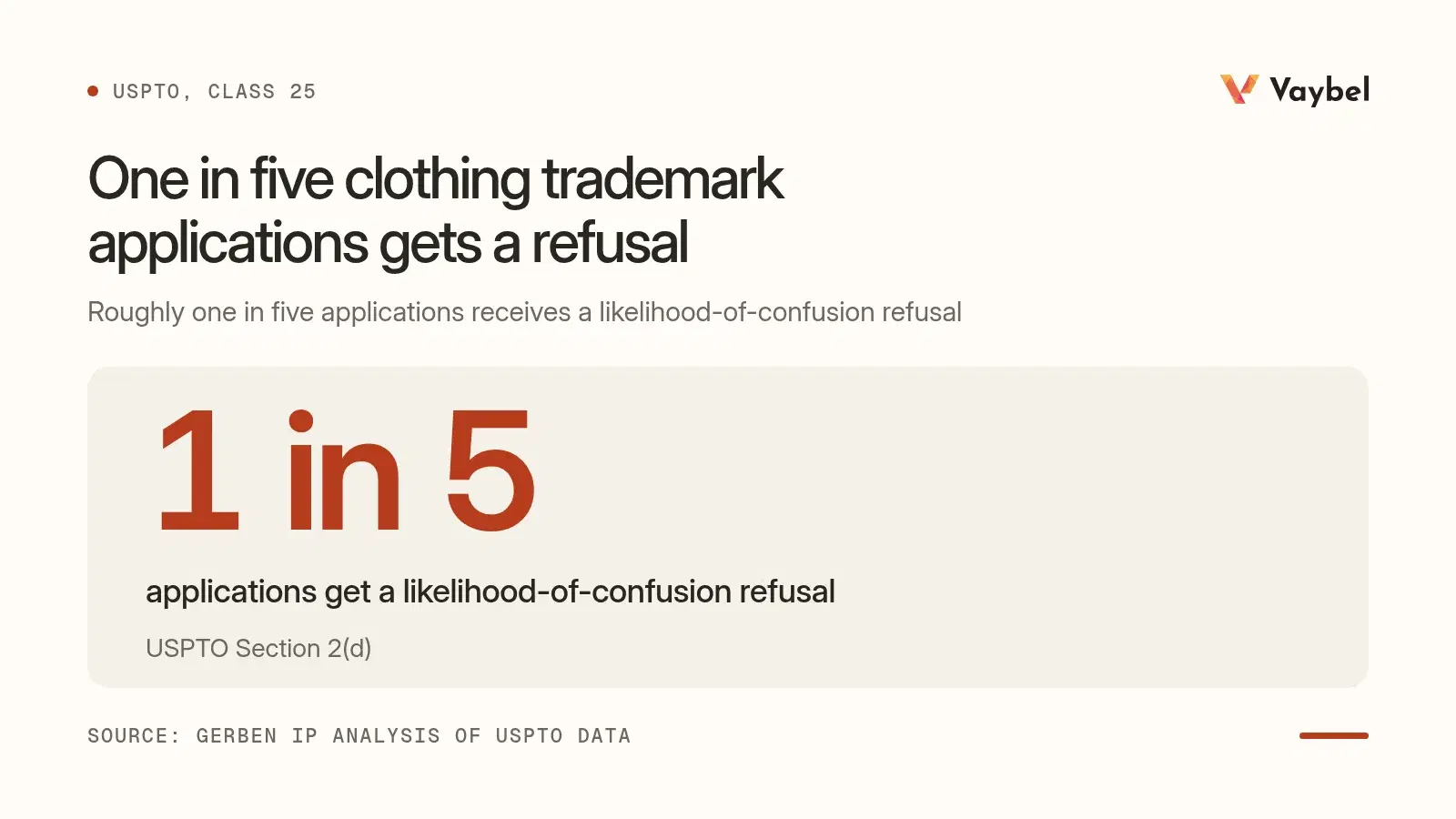
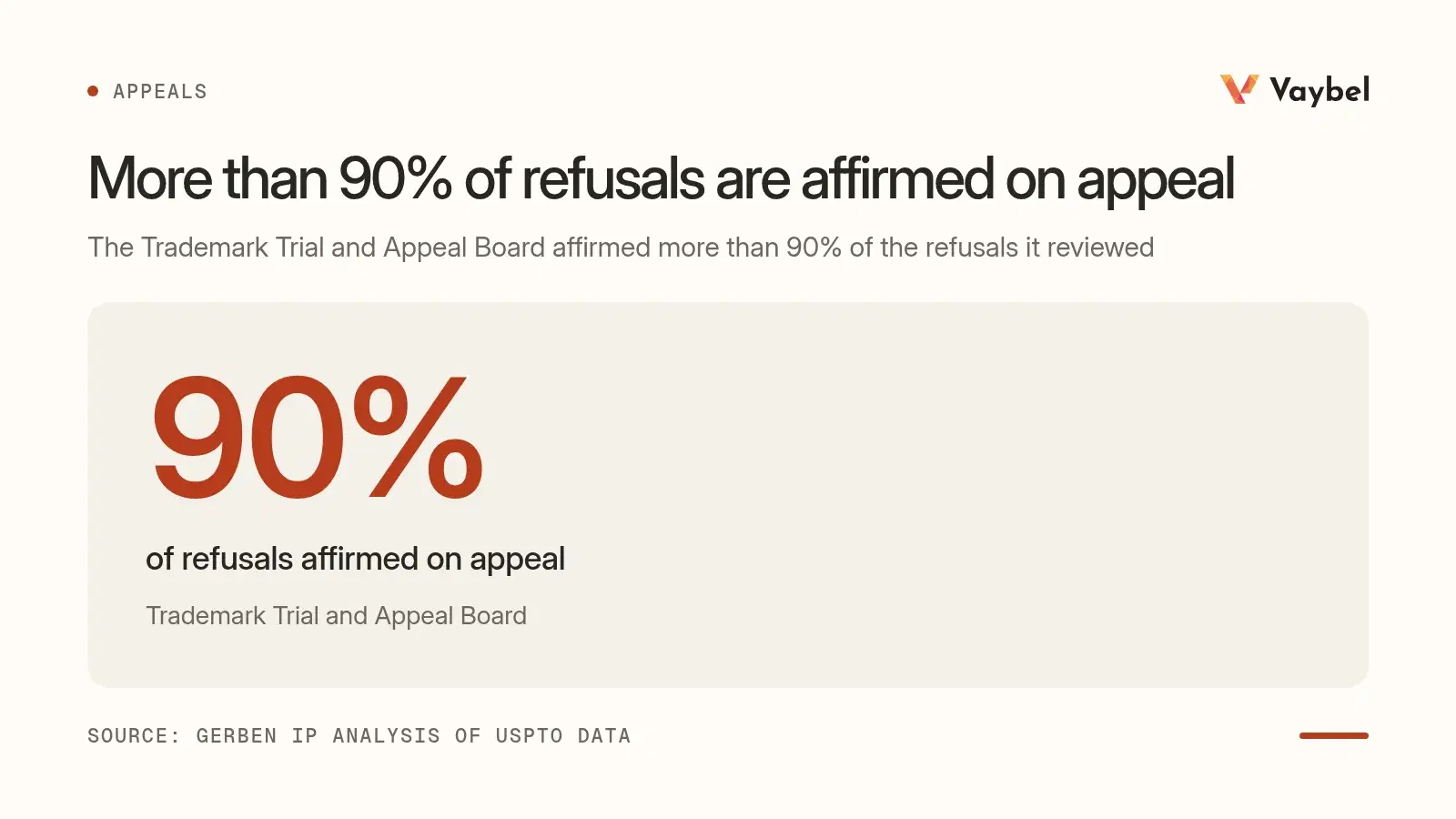
- Around one in five trademark applications gets a likelihood-of-confusion refusal, and those refusals are extremely hard to overturn on appeal.
- Run a free knockout search at the USPTO before you fall in love with a name. Class 25 covers clothing, footwear, and headgear.
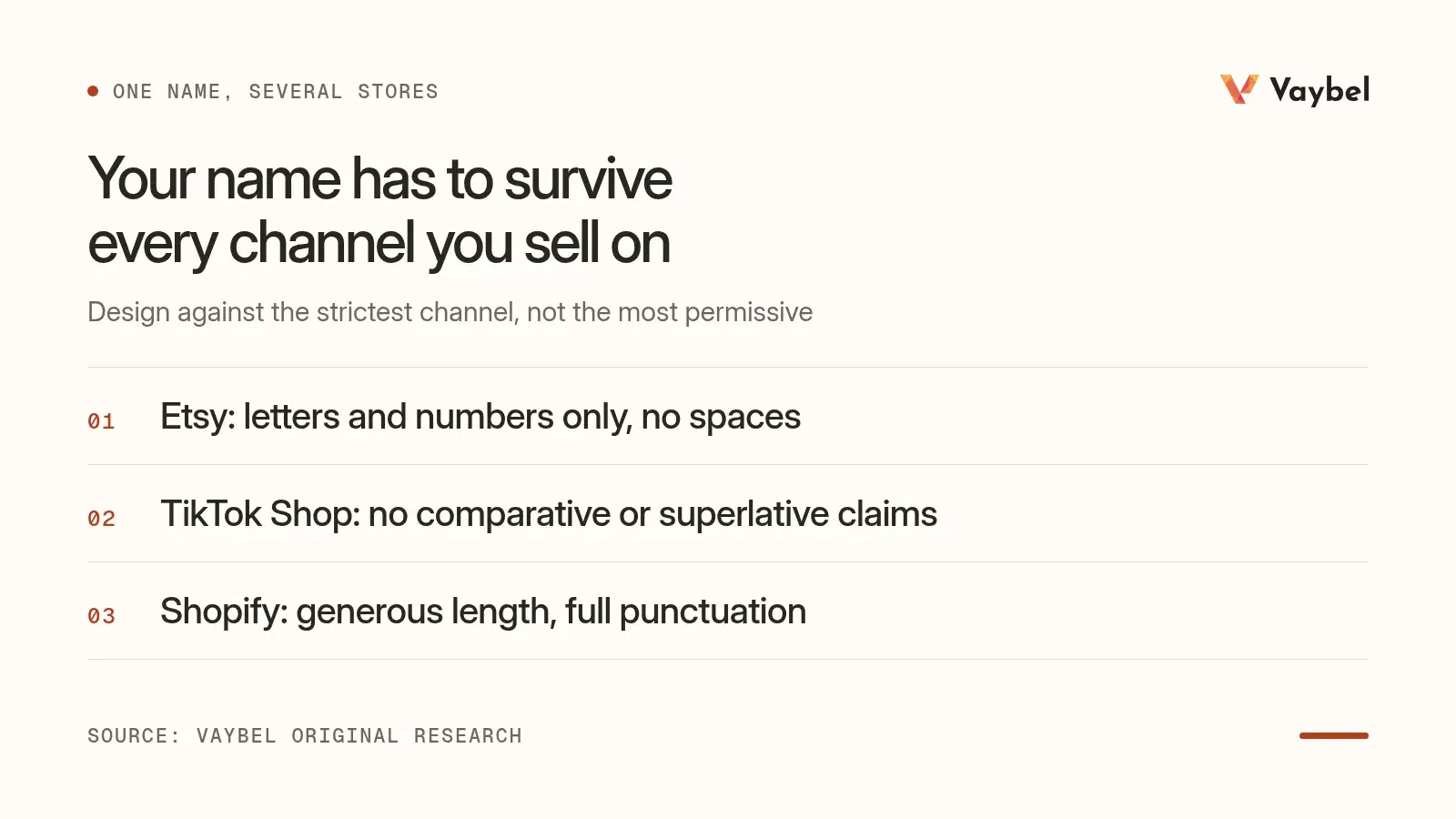
- Etsy shop names are locked to letters and numbers with no spaces, so a name with punctuation breaks on one of your channels before you launch.
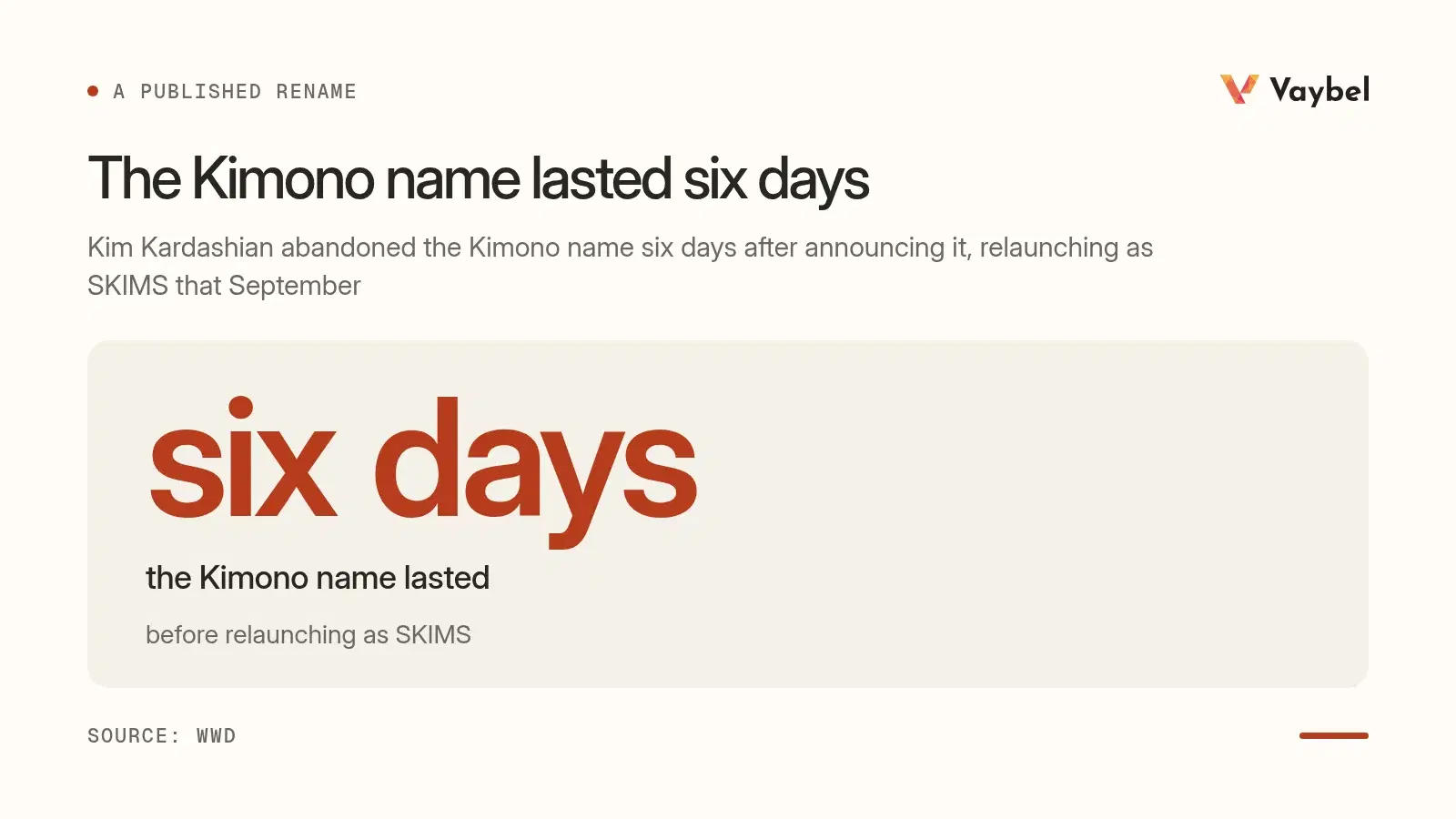
- Kim Kardashian abandoned the Kimono name six days after announcing it, which is the fastest, cheapest version of a mistake most founders discover much later.
- A name that looks sharp in a text field can fall apart on an actual garment. Put it on a mockup before you commit.
Clothing Brand Name Ideas by Niche
Names work in context. A word that feels right for heavyweight streetwear reads wrong on a luxury silk piece, so pick your lane first. If you haven't settled that yet, work out which niche is worth entering before you name anything.
Each list below is a starting point, not a shortlist. Treat them as raw material for the checks in the next sections.
Streetwear and Skate
Streetwear names tend to be short, blunt, and slightly off. They reward a word that sounds like it means something without explaining itself.
Offcut, Deadstock Club, Concrete Sunday, Loiter, Ninth Ward, Blunt Force, Crooked Saints, Asphalt Youth, Nightshift, Corner Store, Riot Season, Dead Air, Spent Youth, Basement Level, Curb Appeal, Hollow Point, Static Bloom, Low Pressure, Ghost Shift, Vacant Lot.
Luxury and Elevated Basics
Luxury names lean on restraint. Surnames, places, and single abstract nouns all work, and anything that sounds like a discount undercuts the price you're trying to charge.
Maison Verre, Aldermere, Linden & Ash, Cartone, Severine, Halcyon Atelier, Vestige, Orwin, Lumen Studio, Brancusi Row, Silt, Marbury, Ossature, Cendre, Vaquier, Thornhill, Quietude, Marchand, Ivory Column, Belrose.
Y2K and Revival
Revival names work when they feel pulled from an old mall directory. Slightly cheap, slightly plastic, deliberately dated.
Cyber Sweetheart, Frosted, Dial Tone, Lip Gloss Riot, Burn Copy, Screensaver, Butterfly Clip, Mall Rat Supply, Holo, Pixel Baby, Rewind Club, Glitter Bomb, Low Rise Society, Jelly Sandal, Chatroom, Sugar Crash, Flip Phone, Y2Kid, Neon Retainer, Tamagoth.
Activewear and Athleisure
Activewear names sell a feeling about your body, not a fabric. Motion words and short, breathable sounds do most of the work.
Cadence, Second Wind, Lactic, Stride Lab, Breathwork, Threshold, Negative Split, Tempo Run, Vital Form, Kinetic Co, Rest Day, Sweat Equity, Zone Two, Recovery Club, Pace Line, Ground Contact, Aerobic, Steady State, Fascia, Mileage.
Minimalist and One-Word
One-word names are the hardest to clear and the easiest to grow into. They carry no category baggage, which means nothing stops you expanding from tees into outerwear later.
Norm, Plainly, Muted, Gist, Blanc, Onward, Stillwater, Paper, Hush, Column, Unfold, Basalt, Common Hours, Almost, Salt, Grain, Fold, Neutral, Quiet Co, Draft.
Graphic Tee and Statement Brands
Statement brands can get away with a name that's a joke, a phrase, or a small provocation, because the name and the artwork are doing the same job.
Nothing Original, Mildly Concerned, Emotional Support Garment, Local Legend, Unverified, Press Play, Loud Opinions, Terms And Conditions, Not A Phase, Certified Fresh Air, Group Chat, Chronically Online, Peak Behaviour, Bit Much, Low Stakes, Overthink Supply, Read The Room, Touch Grass, Side Quest, Main Character.
Want to see a shortlisted name on an actual garment before you commit? That's a two-minute job, and it's covered further down.
What Makes a Clothing Brand Name Work
A good clothing brand name is short enough to fit a woven label, unambiguous when spoken aloud, available as a trademark in your category, and broad enough to survive your brand growing past its first product. Everything else is taste.
Three tests separate names that last from names that get abandoned.
The phone test. Say the name out loud and have someone spell it back. If they can't, you'll lose every word-of-mouth referral to a failed search. Clever misspellings are the most common self-inflicted wound in this category.
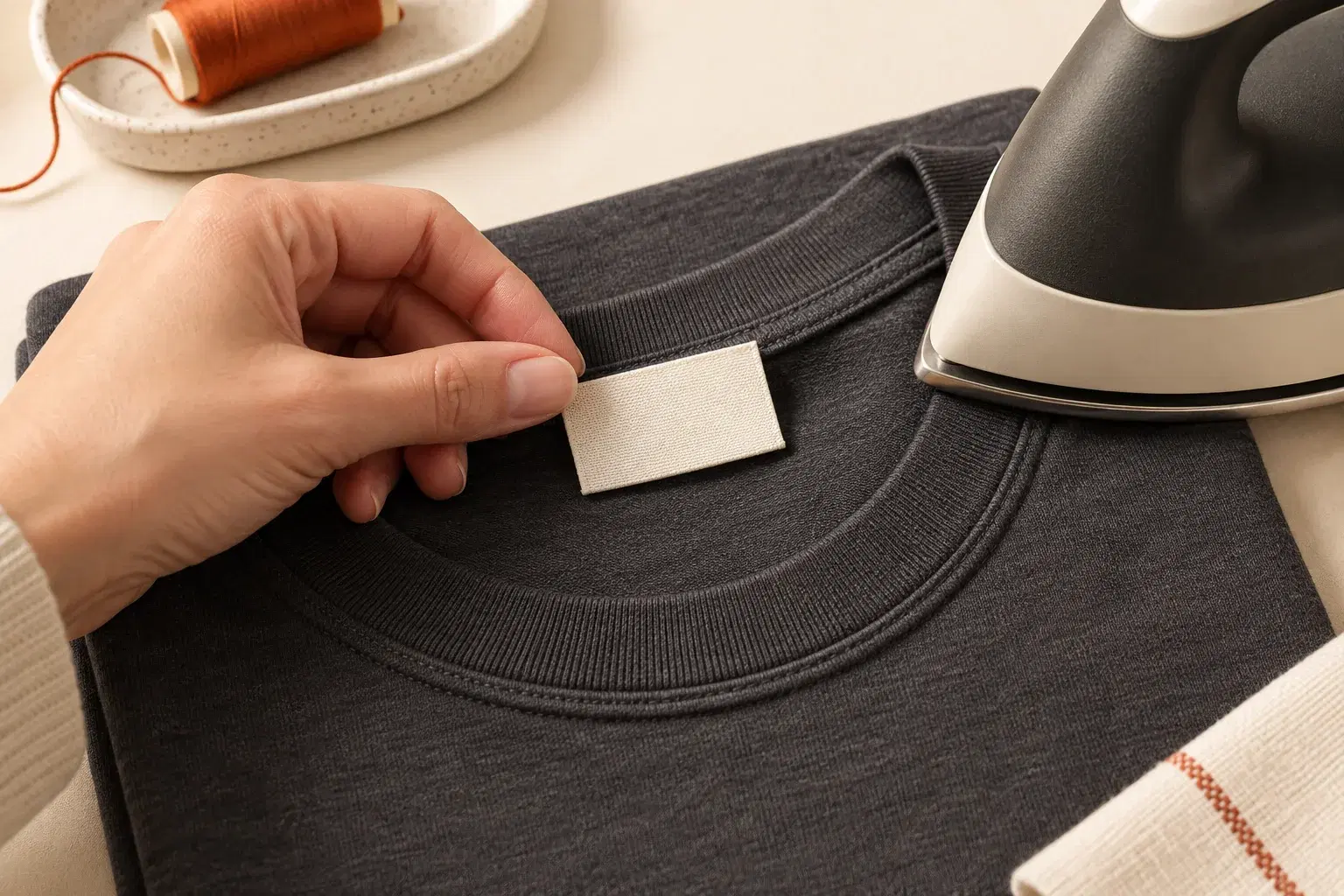
The label test. Long names shrink badly on a neck label and disappear entirely on a hem tag. If it doesn't fit comfortably in a small woven rectangle, it's going to look cramped on every product you make.
The room-to-grow test. Names that lock you into one product, one trend, or one city become a problem the moment you expand. A tee brand named for tees has to relaunch to sell outerwear, and a name built on a passing aesthetic ages at the same speed the aesthetic does.
Here's a useful outside perspective on naming patterns across the industry, if you want to see how these tests play out at scale:
Video: I Analyzed 500 Successful Fashion Brand Names, by Chris Drago
The Five-Point Clothing Brand Name Validation Checklist
Before you commit to any name, run these five checks in order. Each one is free, and stopping at the first hard failure saves you the cost of every step after it.
- Trademark knockout search. Search the USPTO database for your name and close variants in Class 25. A registered mark in your category is a stop sign, not a hurdle.
- Domain availability. Check the .com first, then your realistic fallbacks. Note what's taken and by whom.
- Handles across every channel. Check Instagram, TikTok, and your sales channels together, not one at a time.
- The say-it-and-spell-it test. Read the name to five people who haven't seen it written down and ask them to spell it back.
- The product test. Put the name on a real mockup and look at it on a garment before you decide.
Most founders do step four, skip steps one through three, and discover the problem after the labels arrive.
How to Run a USPTO Knockout Search
A knockout search is a quick, free check for obvious conflicts. It's not a legal clearance, and it won't tell you whether a name is safe. What it does is eliminate the names that were never going to work, which is most of the value for most of the cost.
Run it at the USPTO's trademark search tool, which replaced the old TESS system in late 2023.
Why Class 25 Is the One That Matters
Trademarks are registered against classes of goods, not in the abstract. Class 25 is clothing, footwear, and headgear, and it's the one your brand lives in. A registered mark identical to yours in an unrelated class is usually not your problem. The same mark in Class 25 usually is.
Class 35 covers retail services, which matters if you're running a store rather than a label, and the USPTO groups related classes together precisely because conflicts cross those lines. The USPTO's trademark basics guide walks through how classes and goods descriptions interact.
Reading What You Find
You're looking for two different outcomes, and the second one catches people out.
An identical mark in Class 25 is straightforward. Pick another name.
A confusingly similar mark is the harder call, and it's where most applications die. Similar spelling, similar sound, or a similar commercial impression can all block a registration even when the names aren't the same. According to Gerben IP's analysis of USPTO data, roughly one in five applications receives a Section 2(d) likelihood-of-confusion refusal, and the Trademark Trial and Appeal Board affirmed more than 90% of the refusals it reviewed in a recent year. That's not a fight worth planning around.
When to Stop and Call an Attorney
This is a procedure, not legal advice, and there's a clear line where the free version stops being enough.
Call a trademark attorney before you file, before you invest in labels and packaging for a name you're unsure about, and any time your knockout search turns up something close but not identical. That last case is genuinely a judgment call, and it's the one where a few hundred dollars of professional opinion is cheaper than a rebrand. No naming article, this one included, can tell you whether a specific name is safe to use.
Cleared the knockout search? Good, that's the hardest gate. Start a free trial and you can have the name on a real product before you've finished checking handles.
Check Domains and Handles Before You Fall in Love
Availability is the check founders run last and should run second. It takes minutes, and it kills more names than the trademark search does.
When a Missing .com Actually Matters
A taken .com isn't automatically fatal. What matters is who has it and what they're doing with it. A parked domain you might buy later is a minor inconvenience. An active clothing brand on the .com is the same problem as a trademark conflict wearing a different hat, because customers searching your name will land on them.
Fallbacks that hold up: adding your category, using .co or .store, or choosing a longer exact-match domain over a shorter approximate one. Never pick a domain that's a misspelling of the brand you're actually called.
Naming Rules Differ by Sales Channel
This is the constraint nobody mentions, and it bites after you've decided. Each channel has its own limits, and a name that works on one can be impossible on another.
| Channel | Name constraint | Why it bites |
|---|---|---|
| Etsy | Letters and numbers only, no spaces or punctuation, and it becomes your shop URL | An ampersand, apostrophe, or hyphen in your name can't be reproduced |
| TikTok Shop | Longer names allowed, but no comparative or superlative claims | Anything built on "best" or "better" gets rejected |
| Shopify | Generous length, full punctuation | Rarely the binding constraint, so don't let it lull you |
The practical rule: design your name against the strictest channel you plan to sell on, not the most permissive. If your name can't survive Etsy's format, you'll be trading under two different names, and that split costs you the search equity you're working to build.
Lock Handles You Aren't Ready to Use
Claim the handles the day you shortlist, not the day you launch. They're free, they take minutes, and handle squatting on a name that starts getting traction is a real and unglamorous problem. Claim the same string everywhere, even on platforms you don't plan to use yet.
Test the Name on a Real Product Before You Commit
A name in a text field and a name on a garment are different objects. Long names cramp on a neck label. Names with descenders sit oddly on a chest print. Words that look balanced in a document can look lopsided in a woven tag, and none of this is visible until you see it.
This used to require a sample order and a two-week wait, which is why almost nobody did it and why so many brands discovered the problem after committing. It doesn't anymore. Generate a design with your name on it using the AI Design Generator, then run it through the AI Mockup Generator to see it on an actual garment, on a model, in the context a customer would meet it. Under five minutes, no sample order, no printing cost.
Do this for your top three names before you pick, not after. Seeing all three side by side on the same blank resolves arguments that could otherwise run for weeks, and it regularly changes the answer.
To be clear about what this does and doesn't cover: Vaybel doesn't search trademarks, register domains, or generate brand names. It shows you what the name looks like as a product, which is the one input you can't get from a browser tab.
What to Do When Your Name Is Already Taken
This is the most likely outcome, and every other naming article leaves you here. There are three real options.
Adapt it. Add a word that changes the commercial impression rather than decorating it. Geographic and category modifiers work; adding "Co", "Studio", or "Supply" to a conflicting mark usually doesn't, because it doesn't make the marks meaningfully distinguishable.
Shift it. Keep the feeling, change the word. If you liked the name because it sounded a certain way, the sound is the thing worth keeping, and there's usually a clear-able neighbour a few words away.
Abandon it. If the conflict is a live mark in Class 25, this is the answer. Falling in love with a name you can't register is the single most expensive mistake in this article.
For a sense of what a late rename costs even with unlimited resources: Kim Kardashian announced her shapewear line as Kimono in June 2019 and abandoned the name within days after significant backlash, relaunching as SKIMS that September, as WWD reported at the time. That's the fast, cheap version, caught before a single product shipped. The slow version arrives after you've printed labels, built an audience, and earned search rankings against a name you have to give up. Everything in this article exists to keep you out of the slow version.
Clothing Brand Naming FAQ
How do I check if a clothing brand name is taken? Run a free knockout search at the USPTO trademark database for your name and close variants in Class 25, then check domain availability and social handles. Do the trademark search first, because it's the check that can't be worked around.
Can I use a name if the .com is taken but the trademark is free? Often yes, but look at what's on the .com first. If it's an active clothing brand, you'll compete with them in your own branded search results, which undermines the name regardless of what the trademark register says.
What is Class 25 in trademarks? Class 25 is the international classification covering clothing, footwear, and headgear. It's the class your clothing brand registers in, and the class where a conflicting mark is most likely to block you.
Do I need to trademark my clothing brand name before I launch? You don't need a trademark registration to start selling, but you should run a knockout search before you invest in labels, packaging, or paid traffic. Talk to a trademark attorney about when to file.
How long should a clothing brand name be? Short enough to sit comfortably on a woven neck label and be spelled correctly after hearing it once. One or two words is the safe range, and single words are hardest to clear.
What if my name works on Shopify but not on Etsy? Redesign the name to fit the stricter channel. Trading under two different names splits your brand recognition and your search equity, and it's much harder to undo later than choosing a compatible name now.
Turning Clothing Brand Name Ideas Into a Name You Keep
Clothing brand name ideas are abundant and nearly worthless on their own. What's scarce is a name that clears Class 25, has handles you can hold, fits every channel you sell on, and looks right on a garment. That combination is what separates a brand that compounds from one that restarts.
So do it in order. Shortlist three names you like. Run the knockout search and drop anything with a live conflict. Check domains and handles together. Say each one out loud to someone who hasn't seen it written. Put the survivors on a mockup and look at them as products. Then commit, and don't revisit it.
The founders who get this wrong aren't the ones who picked a dull name. They're the ones who picked a great name and found out too late that it belonged to somebody else. An hour of checking now buys you a name you never have to give back.
Ready to see your shortlist on real products? Start your free trial and put all three names on a garment today, or read the full AI-first launch workflow to see what happens after the name is settled.