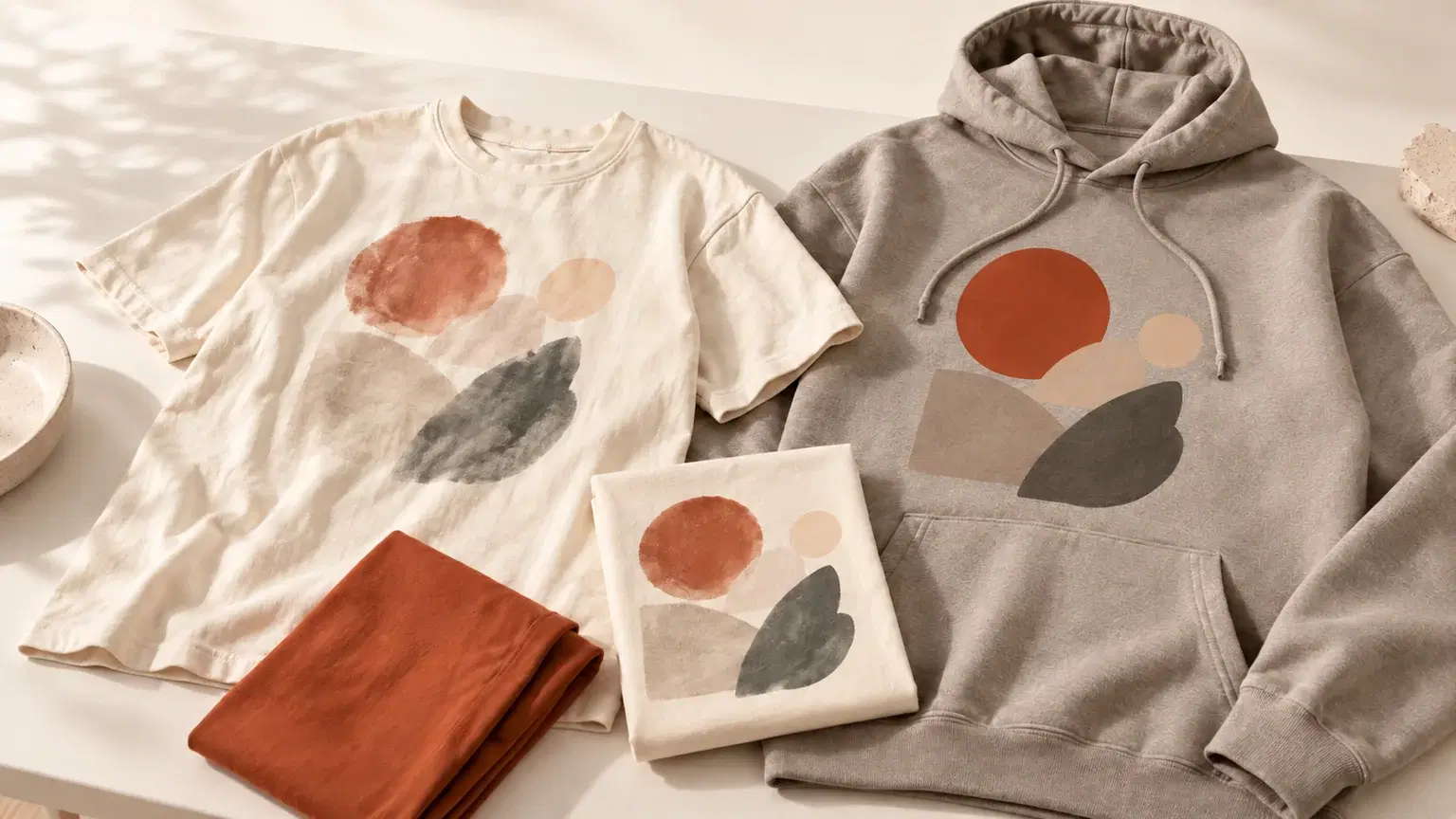
The short version of DTG vs DTF: DTG sprays water-based ink directly into a pre-treated garment, so it works best on cotton and leaves the softest finish. DTF prints your design onto a film, then heat-presses it on top of the fabric, so it works on polyester, fleece, nylon, blends, and hats that DTG can't touch. Your fabric picks the method. You pick the fabric.
Here's the part that surprises most brand founders: you are probably not choosing between them at all.
Every guide to this question was written for someone deciding which printer to buy. Search it and you'll get heat-press retailers, industrial equipment makers, and RIP software vendors, all answering the same question, which machine should I purchase this year. If you sell through Printful or Printify, you will never own either machine. Your provider already made that call.
So this guide runs the other way around. Below you'll find what actually separates the two methods on the shirt your customer opens, why "which lasts longer" is the wrong question, what the cost numbers on every other page really refer to, and a per-product rule you can run across your whole catalog in about ten minutes.
Key Takeaways
- Fabric decides the method. DTG bonds with natural fibers; DTF handles cotton, polyester, fleece, nylon, and blends because the design sits on top instead of soaking in.
- Neither method is flatly more durable. They fail differently. DTG fades gradually, while DTF lifts, peels, or cracks, and very hot water accelerates the cracking.
- DTG is the default at every major fulfillment partner. DTF is the exception you opt into by picking a product DTG can't print.
- Printful moved its entire direct-to-film catalog onto DTFlex at no extra cost, which means most comparison articles online now describe a process that has been replaced.
- Every cost figure you'll find for DTG vs DTF is a print shop's cost, not yours. Your number is the base cost on the specific product in your catalog.
DTG vs DTF: The Short Answer
DTG (direct-to-garment) works like an inkjet printer aimed at a finished shirt. DTF (direct-to-film) works like a very good iron-on: print the design on film, dust it with adhesive powder, then press it onto the garment. Everything below follows from that one difference.
| DTG | DTF | |
|---|---|---|
| Where the ink goes | Into the fabric fibers | Onto a film, then pressed on top |
| Best fabrics | Cotton, bamboo, natural fibers | Cotton, polyester, fleece, nylon, blends, hats |
| Pre-treatment | Required, adds time | None needed |
| Hand feel | Soft, breathable, part of the shirt | Slight texture, sits like a thin patch |
| Dark garments | Needs a white underbase | Holds color without one |
| How it fails | Fades slowly | Lifts, peels, or cracks |
| Large prints | Stays breathable | Can feel rigid and heavy |
| Best for | Photographic detail, soft retail tees | Synthetics, dark colors, activewear, headwear |
Read that as a menu, not a verdict. DTF vs DTG printing is rarely an either/or decision: most catalogs end up running both, because most catalogs contain both a cotton tee and something that isn't one.
Want to see how a design lands on each? Vaybel's AI Mockup Generator renders your artwork on real catalog blanks before you pay for a sample.
What DTG Printing Actually Does
DTG sprays water-based ink onto a garment that has been pre-treated so the ink binds to the fibers instead of beading on the surface. The ink becomes part of the shirt. Run your hand across a well-cured DTG print and you feel cotton, not artwork.
That absorption is the whole appeal, and it's also the limit. Ink needs somewhere to soak. Cotton, bamboo, and linen accept it. Polyester mostly doesn't, which is why DTG stops being an option the moment you move to activewear or fleece.
Two more things sellers learn the hard way. Dark garments need a white underbase printed first, which adds a layer and softens color slightly compared to the same design on white. And pre-treatment leaves a faint rectangle on some dark blanks if the shop cures it poorly, a complaint that shows up in returns far more often than color accuracy does.
DTG is also the method your fulfillment partner reaches for by default. Printful, Printify, Gooten, and Amazon Merch all run DTG as their primary decoration method, which means the cotton tee at the center of most clothing brands is already a DTG product whether or not anyone told you.
What DTF Printing Actually Does, and What Changed in 2026
How Direct-to-Film Works
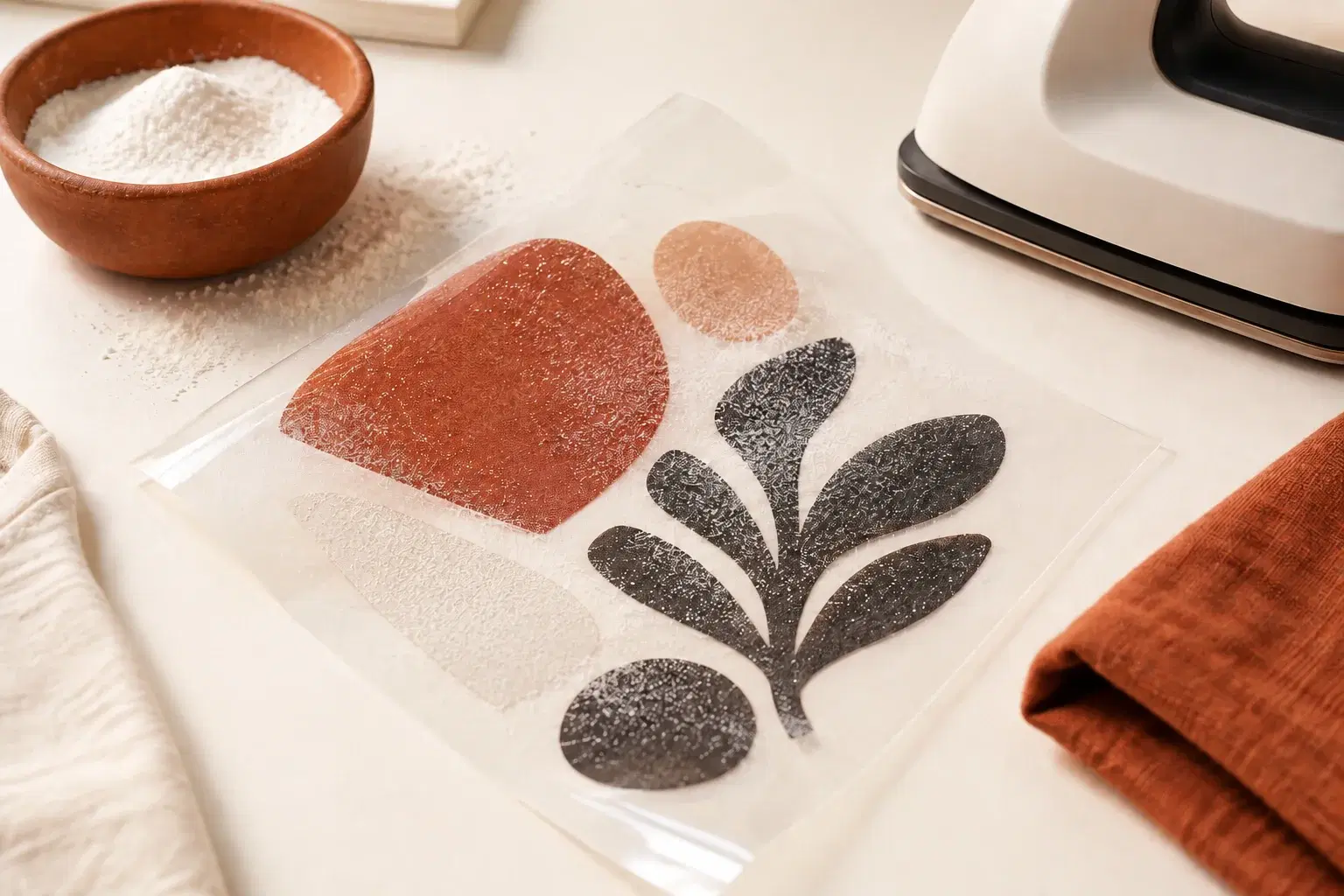
DTF prints your design onto a sheet of PET film, coats the wet ink with an adhesive powder, cures it, and heat-presses the whole thing onto the garment. No pre-treatment, no waiting for the shirt to dry before printing.
Skipping pre-treatment is why DTF moves faster through a shop. It also explains the tradeoff: the design is a thin layer bonded to the surface, not ink living inside the cloth.
DTFlex, and Why Older Guides Are Out of Date
This is where most articles on DTG vs DTF have quietly gone stale.
In October 2025, Printful launched DTFlex, its premium direct-to-film method, built for sharper edges, richer color, and stronger wash durability than standard DTF. Every direct-to-film product in the Printful catalog now runs on it, at no additional cost, and it covers cotton, polyester, fleece, nylon, blends, and hats.
Worth noting how recent that is. The most-cited comparison article on this topic, Printful's own DTG vs DTF guide, was published in October 2024 and describes generic DTF, a full year before the company replaced it. If you have read a DTF vs DTG comparison and come away thinking DTF means a stiff, plasticky patch, you may be remembering a process that is no longer what your provider ships.
DTG vs DTF: Closer Look at Printful's Premium DTFlex Method, Printful.
DTG vs DTF: The Four Differences That Change What You Sell
Fabric Is the Decision That Makes the Decision
Pick the garment and you've picked the method. A cotton tee routes to DTG. A poly-fleece hoodie, a performance top, a dad cap, or a 50/50 blend routes to DTF, because DTG has nowhere to put the ink.
This is why arguing DTG vs DTF in the abstract goes nowhere. Nobody prints a nylon windbreaker with DTG and gets a bad result. They get no result. If you're still choosing blanks, our guide to the best blank t-shirts for a clothing brand covers which catalog staples print cleanly on which method.
Hand Feel Is Where Customers Form an Opinion
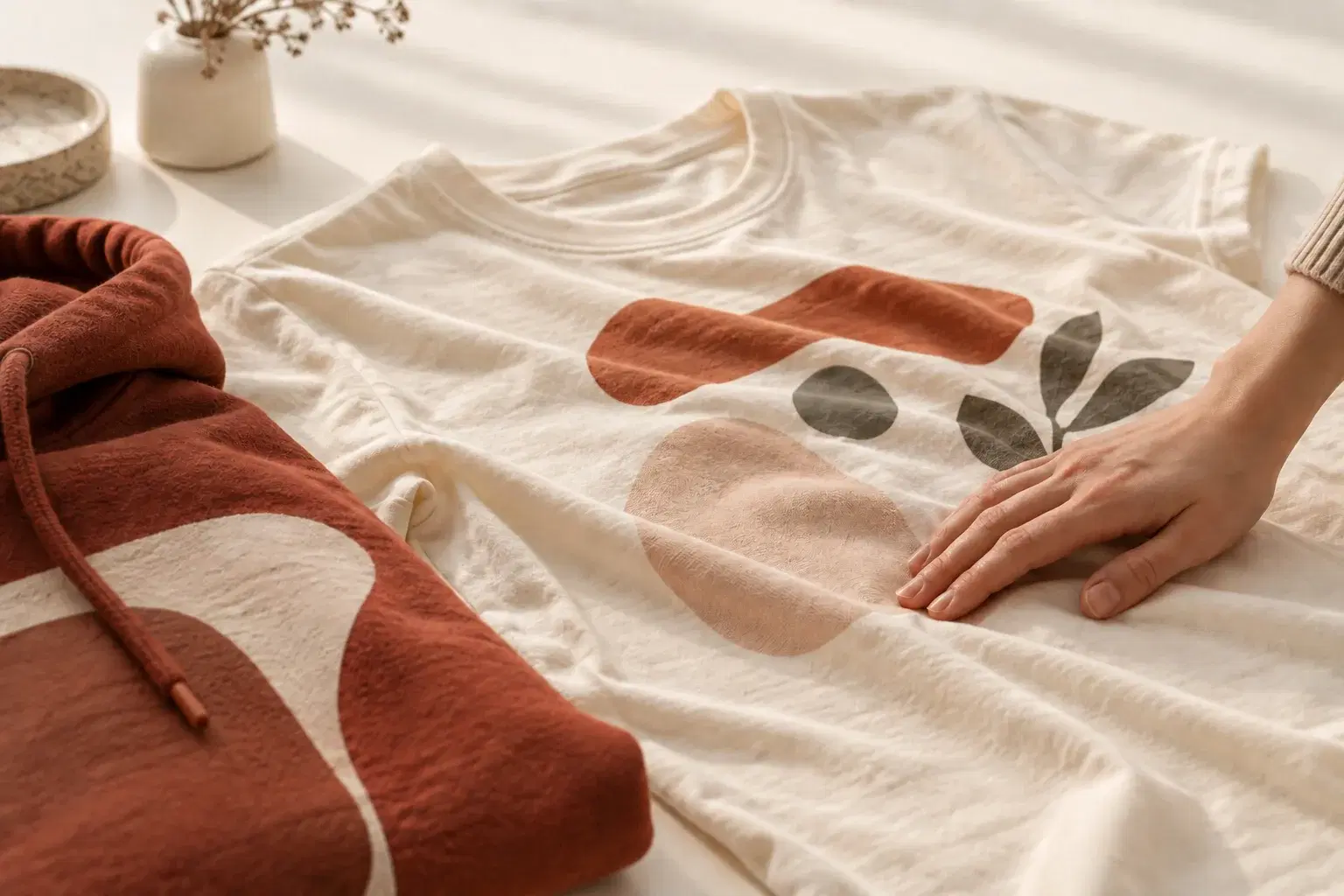
DTG wins on softness, and it isn't close. The ink is in the fabric, so the print breathes and drapes exactly like the shirt around it.
DTF sits on top. Modern DTF is far thinner and more flexible than it was two years ago, but it's still a layer. On a small chest logo, nobody notices. On a design covering most of the front, they do.
Durability: They Fail Differently, Not Unequally
This is the question every comparison gets wrong. "Which lasts longer" assumes both methods degrade the same way and one is slower. They don't.
A DTG print fades. Color softens gradually across dozens of washes, and the shirt ages the way a vintage tee ages, which plenty of buyers actively like.
A DTF print does the opposite. It holds color much longer, then fails at the edges by lifting, peeling, or cracking. As Arklavo's DTF vs DTG guide puts it, a properly cured DTG print fades slowly but never peels, while a DTF print resists fading longer but fails by lifting or cracking. Printful notes that DTF can develop small cracks when washed in very hot water.
So the real question isn't which lasts longer. It's which failure you'd rather explain in a support email. A faded shirt reads as worn in. A cracked shirt reads as broken.
Large Prints Are Where DTF Gets Heavy
Printful states plainly that DTF isn't recommended for printing large areas, because a big transfer can make the garment feel rigid and heavy and reduce breathability. Heat press retailer HeatPressNation makes the same observation from the shop floor, noting that DTF transfers are slightly thicker than DTG prints and that heavy solid coverage may feel heavier on the garment.
Practical version: a full-front design on cotton should be DTG if you have the option. If the fabric forces DTF, break up solid fills with negative space so less adhesive lands on the shirt.
What It Actually Costs You, Not What It Costs a Print Shop
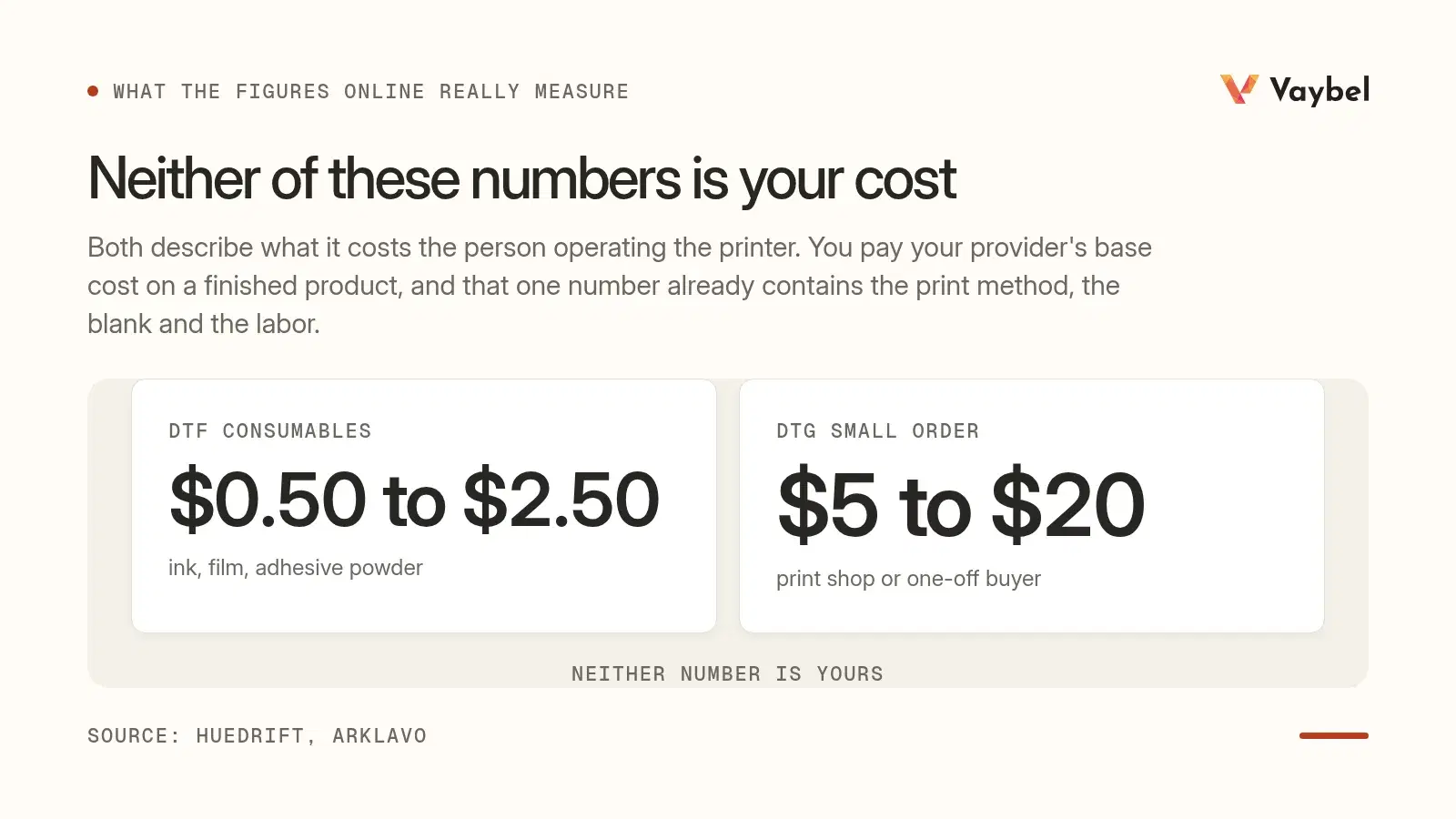
Search "DTG vs DTF cost" and you'll get figures like $0.50 to $2.50 per shirt in consumables for DTF or $5 to $20 per shirt for DTG.
Those numbers are real. They are also not yours.
Every one of them describes what it costs the person operating the printer: ink, film, powder, pre-treatment, machine time. You don't buy any of that. You buy a finished product at your provider's listed base cost, and that one number already contains the print method, the blank, and the labor.
| The figure you'll find | What it actually measures | Who pays it |
|---|---|---|
| $0.50 to $2.50 per shirt | DTF consumables: ink, film, adhesive powder | The print shop |
| $5 to $20 per shirt | DTG printing on a small custom order | The print shop or a one-off buyer |
| Thousands, up front | A DTG or DTF machine | Whoever is buying equipment, which isn't you |
| Your provider's base cost | The finished product: blank, print, and labor | You |
Comparing consumable costs to set your pricing is like comparing flour prices to decide what to charge for a cake.
Here's the number that matters, using a labeled hypothetical. Say a cotton tee lists at a base cost of roughly twelve dollars and a poly-fleece hoodie at roughly twenty-eight. That gap is the garment talking, not the print method.
Method follows fabric. Fabric drives cost. Run the comparison on finished products in your own catalog rather than on printing techniques, and the picture clears up fast. Our ROI calculator handles the margin math once you have both base costs in front of you.
Ready to test the difference? Start a free trial and generate print-ready artwork for both a cotton staple and a synthetic piece from the same idea.
Do Customers Notice the Difference?
Almost none of them know the acronyms. Ask a buyer whether they prefer DTG or DTF and you'll get a blank look.
What they notice is narrower and more useful to you. They notice whether the print feels like part of the shirt or like something stuck to it. They notice a big graphic that makes the front stiff. And they notice, around wash fifteen or twenty, whether the design faded or started coming off.
That reframes the decision usefully. You're not optimizing for print-nerd specs, you're optimizing for reorder rate and return rate.
On a soft cotton tee where the finish is the product, DTG's hand feel is worth protecting. On a performance piece where the customer already expects a technical fabric, a DTF print is unremarkable and nobody blinks.
The catch is that you can't feel a garment you haven't ordered. Ordering samples of every variant is slow and expensive, which is why seeing the design rendered on the actual blank first, then sampling only the finalist, is how most solo founders keep this manageable.
How to Choose DTG vs DTF: A Per-Product Rule
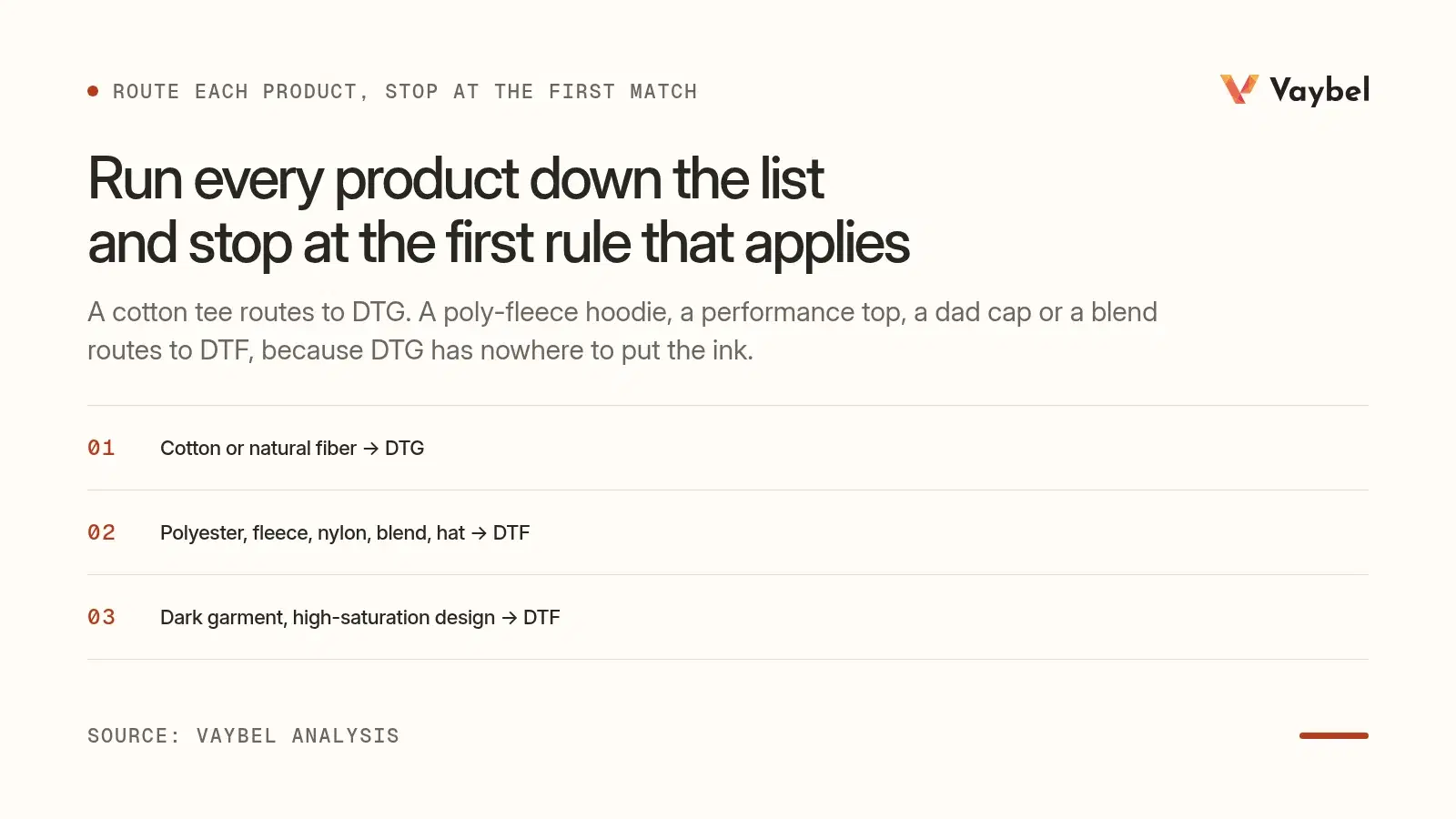
Run each product in your line through this in order. Stop at the first rule that applies.
- Is the garment pure cotton or another natural fiber? Go DTG. Softest result, and it's your provider's default anyway.
- Is it polyester, fleece, nylon, a blend, or a hat? Go DTF. DTG has nowhere to bond.
- Is it a dark garment with a vivid, high-saturation design? Lean DTF. No white underbase means cleaner color.
- Does the design cover most of the front? Lean DTG if the fabric allows it, to protect breathability.
- Is the piece sold on hand feel, like a premium heavyweight tee? Go DTG, and keep the print modest.
- Do you need the whole garment covered, seams included? Neither. That's all-over print, covered below.
One caveat before you apply this. On a multi-provider network like Printify, the same listing can be fulfilled by different print shops running different methods, so the product you sampled isn't guaranteed to be the product that ships. Lock your preferred provider before you publish and sample that exact configuration. Our guide to choosing blanks for a clothing brand walks through provider routing in detail.
DTG vs DTF vs Screen Printing: Where the Other Methods Fit
Two methods sit just outside this comparison and catch a lot of the same searches.
Screen printing pushes ink through a stencil, one screen per color. It's the cheapest and most durable option at volume, and the wrong tool for on-demand, where every order may be a different design. The per-color setup cost only pays off across hundreds of identical units.
All-over print isn't a competitor to DTG or DTF so much as a different category. The fabric gets printed first, then the garment is cut and sewn from it, so artwork covers every panel including sleeves and seams. It needs a repeating tile rather than a contained graphic, and it costs roughly double. We compare it head to head with DTG in DTG vs all-over print.
For a clothing brand fulfilling on demand, the working set is DTG and DTF. The other two matter when you move to bulk or to cut-and-sew.
Frequently Asked Questions
What's the difference between DTG and DTF? DTG prints water-based ink directly into a pre-treated garment, so the design becomes part of the fabric and feels soft. DTF prints the design onto a film, coats it with adhesive powder, and heat-presses it onto the garment, so it sits on top and works on fabrics that can't absorb ink.
What lasts longer, DTG or DTF? They fail differently rather than one outlasting the other outright. DTG fades gradually with washing. DTF holds color longer and then fails at the edges by lifting, peeling, or cracking, especially in very hot water.
Is DTG or DTF cheaper? For a print-on-demand brand, the method isn't what you pay for. You pay your provider's base cost on a finished product, and the garment drives that number far more than the print method does. The per-shirt figures published elsewhere are print shop consumable and equipment costs, not seller costs.
Do customers like DTF or DTG better? Buyers don't know the terms. They respond to hand feel and wash durability. DTG feels softer and more like part of the shirt, which matters most on cotton basics sold on quality. DTF is expected and unremarkable on synthetics and activewear.
Is DTF better than DTG? Neither is better in general. DTF is better on polyester, fleece, nylon, blends, hats, and dark garments with saturated color. DTG is better on cotton, on photographic detail, and anywhere hand feel is part of what you're selling.
What are the disadvantages of DTF? A slight surface texture instead of a soft hand, edge failure over time, and a real limit on coverage. Printful states DTF isn't recommended for printing large areas because it can make the garment feel rigid and heavy and reduce breathability.
What shirt is best for DTG printing? Ring-spun 100% cotton gives DTG the finest detail and softest result. Combed ring-spun midweight tees are the usual choice for retail brands, and our blank t-shirt guide ranks the catalog staples.
Let the Fabric Pick the Method
The DTG vs DTF debate has a boring answer and a useful one. The boring answer is that DTG is softer on cotton and DTF works on everything else. The useful answer is that you are not really choosing a print method at all. You're choosing garments, and the method comes attached.
Three things to carry into your next drop. Sort your catalog by fabric first and let the method fall out of that, rather than picking a method and hunting for products to fit it. Decide which failure mode you'd rather support, fading or peeling, because that choice is more honest than asking which lasts longer. And lock your fulfillment provider before you publish, so the shirt you sampled is the shirt your customer opens.
The workflow matters as much as the decision. One idea, generated as print-ready artwork, rendered on the actual blank, and published across your channels in a single pass is how a mixed catalog stays manageable when you're running it alone.
Ready to build both? Try Vaybel free for 7 days and put the same design on a cotton staple and a synthetic piece to see how each one lands.