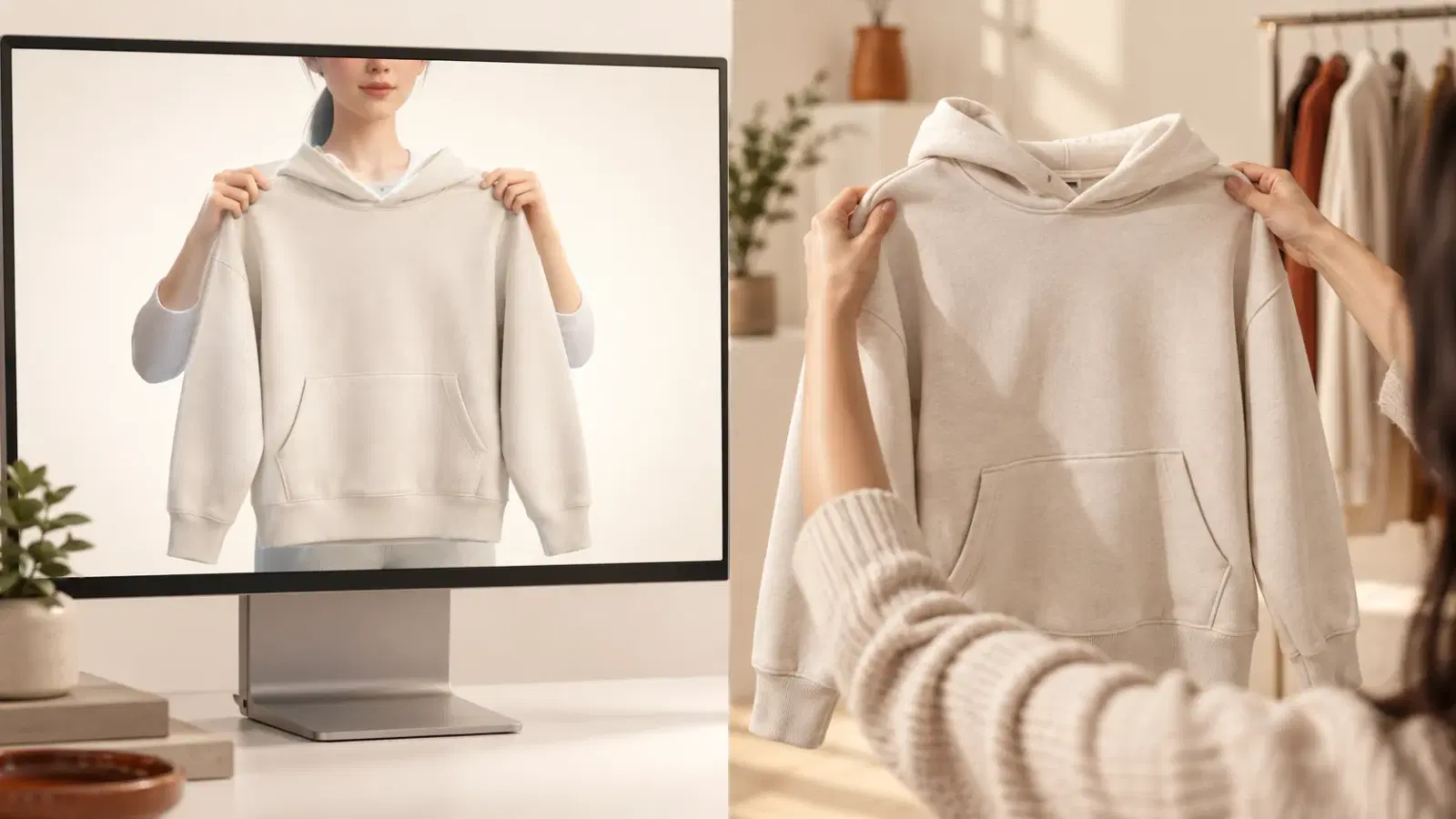
AI UGC is AI-generated video built to look like content a real customer filmed. For clothing brands it earns its keep in paid ad testing, product demos, and colorway variants, and it loses to real creators on fit, drape, and organic trust. The claim matters more than the format: the FTC says its reviews and testimonials rule has no blanket prohibition on AI avatars in marketing, and that same rule targets testimonials from people who don't exist.12
Here's the part almost every guide gets backwards. The risky question isn't "am I allowed to use AI video?" It's "does my video claim to be a customer?" An AI avatar holding up your hoodie and showing the print is an ad. The same avatar saying "I ordered this last week and the fit is perfect" is a testimonial from someone who never existed, never ordered, and never wore it.
You already suspect the AI UGC pitch is oversold, and you're right to. Searches for AI UGC have climbed over the past year, and the tools are pitched as cheaper than a creator shoot.3 But every answer you can find online comes from someone with a side in the fight: the tool vendors say AI wins, and the creator marketplaces say humans win.
This guide takes neither side. You'll get what the FTC's rule says about AI avatars, the three places AI UGC genuinely beats a creator for a clothing brand, the three places it still loses badly, and a two-track workflow you can run solo.
Key Takeaways
- The FTC says its rule has no blanket prohibition on AI avatars in marketing.2 What the rule targets is a review or testimonial that misrepresents being from "someone who does not exist, such as AI-generated fake reviews."
- Knowing violations of the rule can carry civil penalties of up to $53,088 each.4
- Small print didn't head off the backlash. Guess ran AI-generated models in the August 2025 issue of Vogue with the disclosure in small print on the page, and the campaign set off a public debate.
- Fit is where AI UGC breaks. Size and fit drive about 70% of online apparel returns, and a synthetic body can't honestly demonstrate how a garment falls on a real one.
- The winning pattern starts from real garments. Mango trained its AI on actual photographs of each piece before generating a campaign across 95 markets.
In this guide:
- What AI UGC actually is
- Is AI UGC legal?
- Where AI UGC wins for clothing brands
- Where real creators still win
- The real cost comparison
- A two-track workflow you can run solo
What AI UGC Actually Is
AI UGC is video generated from a script and a synthetic presenter, styled to imitate the look of customer-shot phone footage: handheld framing, imperfect lighting, a face talking straight to camera. The category exploded because an AI UGC generator removes the slowest parts of creator marketing. No shipping product to a creator, no waiting on a turnaround, no revision rounds.
The name is a contradiction worth noticing. User-generated content earns attention because a user made it. Strip the user out and you keep the look but lose the reason it worked. That's not automatically a problem. It does change what the asset can honestly claim.
For clothing brands specifically, there are two very different things people mean by AI UGC video:
- Synthetic presenter video. An AI avatar talks about your product. The garment may be composited in, or may not appear on a real body at all.
- Real-garment AI video. You start from actual photographs of the real piece, then animate or place them. The garment on screen is the garment you sell.
That second pattern is the one with a track record. When Mango built its Sunset Dream campaign for its teen line, the team photographed every real garment first. Only then did it train a model to place those real pieces on a figure, retouch the output in its own studio, and run it across 95 markets.5 The AI handled the presentation. The product stayed real.
Want to see where this fits a clothing workflow? The AI Product Video Generator builds social cuts from listing assets you already have.
Reliablesoft Academy walks through the current AI UGC ad workflow end to end in this full guide, which is useful for seeing what the tools actually output.
Is AI UGC Legal?
The FTC has addressed AI avatars directly. Its reviews and testimonials rule "has no blanket prohibition on the use of AI-generated avatars in marketing."2 What the rule prohibits is a fake or false review or testimonial, including one from a customer who doesn't exist.1 The FTC adds that using an avatar could still be deceptive under the FTC Act, so the format alone doesn't settle it.2 The claim does most of the work.
The testimonial line
The FTC's Consumer Reviews and Testimonials Rule took effect on October 21, 2024. It addresses reviews and testimonials that "misrepresent that they are by someone who does not exist, such as AI-generated fake reviews, or who did not have actual experience with the business or its products or services," and it prohibits businesses from creating or selling them.1 The FTC says the rule authorizes courts to impose civil penalties for knowing violations, up to $53,088 each.24
That wording reaches beyond text reviews. On avatars, the FTC says a company's use of one "might be considered a 'testimonial' under the rule," which would be prohibited "only if the underlying testimonials were fake or false."2 A synthetic person describing a garment they never wore is hard to square with that: the person doesn't exist, and there was no actual experience.
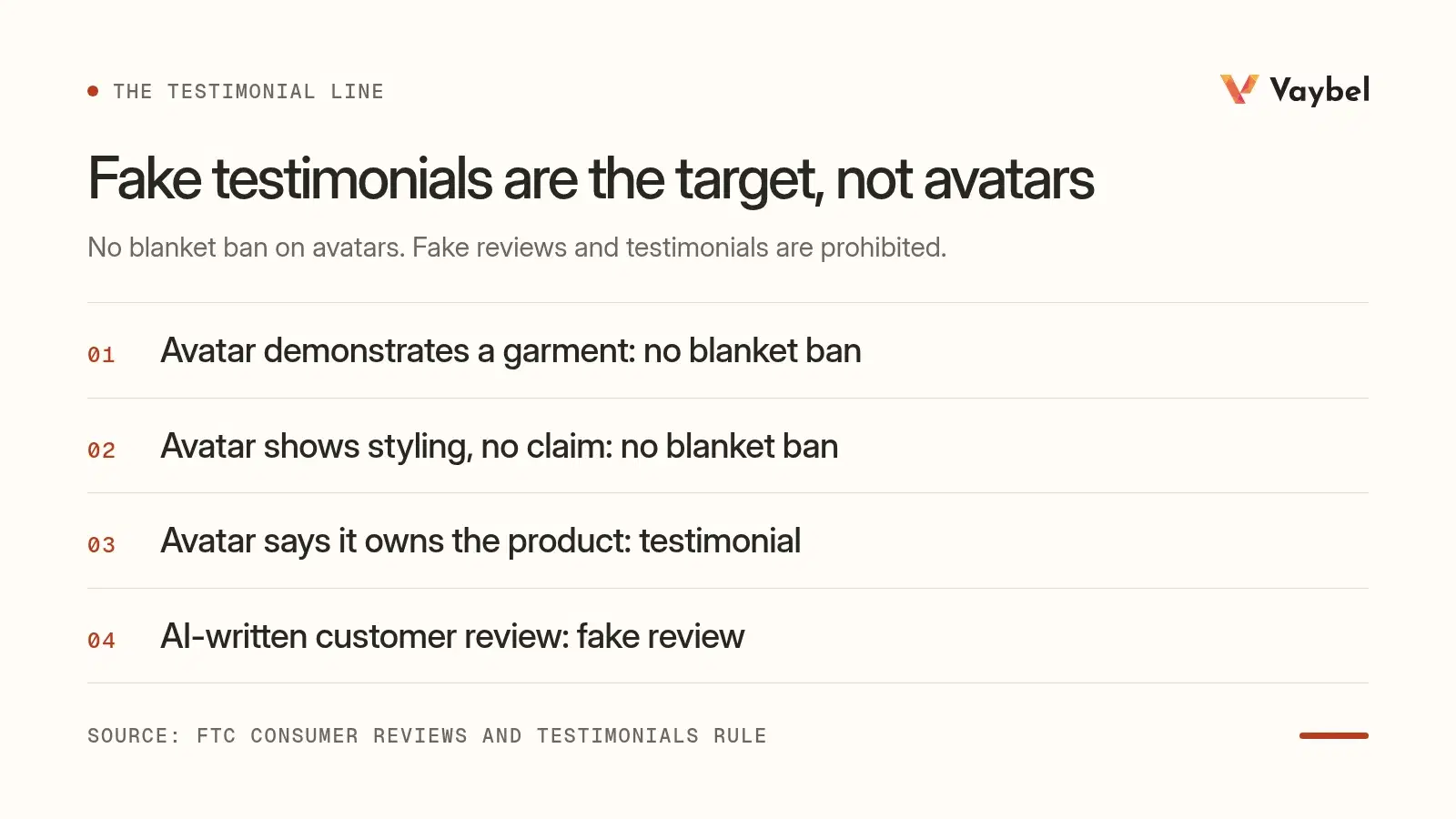
Here's how that maps to four common videos:
| What the video does | What the FTC's rule says |
|---|---|
| AI presenter demonstrates a garment in an obvious ad | No blanket prohibition on avatars2 |
| AI presenter shows styling or colorways, makes no customer claim | No blanket prohibition on avatars2 |
| AI presenter says "I ordered this and the fit is perfect" | Testimonial from a person who doesn't exist1 |
| AI-written review posted as a customer review | A fake review, which the rule prohibits1 |
That table covers one rule. Others apply too: the FTC notes avatar use can still be deceptive under the FTC Act, and disclosure requirements come from platforms and, in New York, from state law.
The awkward part for clothing brands: the script style the AI UGC tool category sells hardest is first-person ownership. "I've worn this every day for a month." That's the template in most of these products, and it's the one line you shouldn't record.
Disclosure that actually works
Labeling rules come from elsewhere. TikTok requires creators to label realistic AI-generated content, and it reads Content Credentials to automatically label AI-generated media made on some other platforms.6 New York added a state requirement in 2026: since June 9, most ads that use an AI-generated "synthetic performer" and may reach New York audiences have to disclose it conspicuously.7
Two 2025 examples show different ways to handle it.
Guess ran AI-generated models in the August 2025 issue of Vogue. The disclosure was in small print on the page. A TikTok video about the ad was viewed more than 2.7 million times, and the campaign set off a public debate.8
H&M set its terms out up front. It announced plans for digital twins of 30 real models and said the models would own the rights to their twins and be paid each time one is used. The images were reported to carry watermarks showing they were made with AI.9 The plan still drew criticism from model advocates. The difference is that the terms were public from the start.
For a small brand the lesson is cheap to apply: put the label where a scrolling customer will actually see it, and never let an AI presenter claim ownership of the product.
This is a summary of published rules, not legal advice. If you're running AI UGC at scale, have a lawyer review your scripts.
Where AI UGC Wins for Clothing Brands
Paid ad creative volume
Paid social rewards volume testing, and creator UGC can't supply it at speed. Getting 20 ad variants from creators means 20 briefs, shipments, and turnarounds. Getting 20 from AI means 20 renders.
This is the strongest case for AI UGC ads, and it holds specifically in paid, where the viewer already knows they're seeing an ad. You're testing hooks, framing, and pacing to find which angle earns attention. Once a winner emerges, you can reshoot it properly with a real creator.
Product demonstration without fit claims
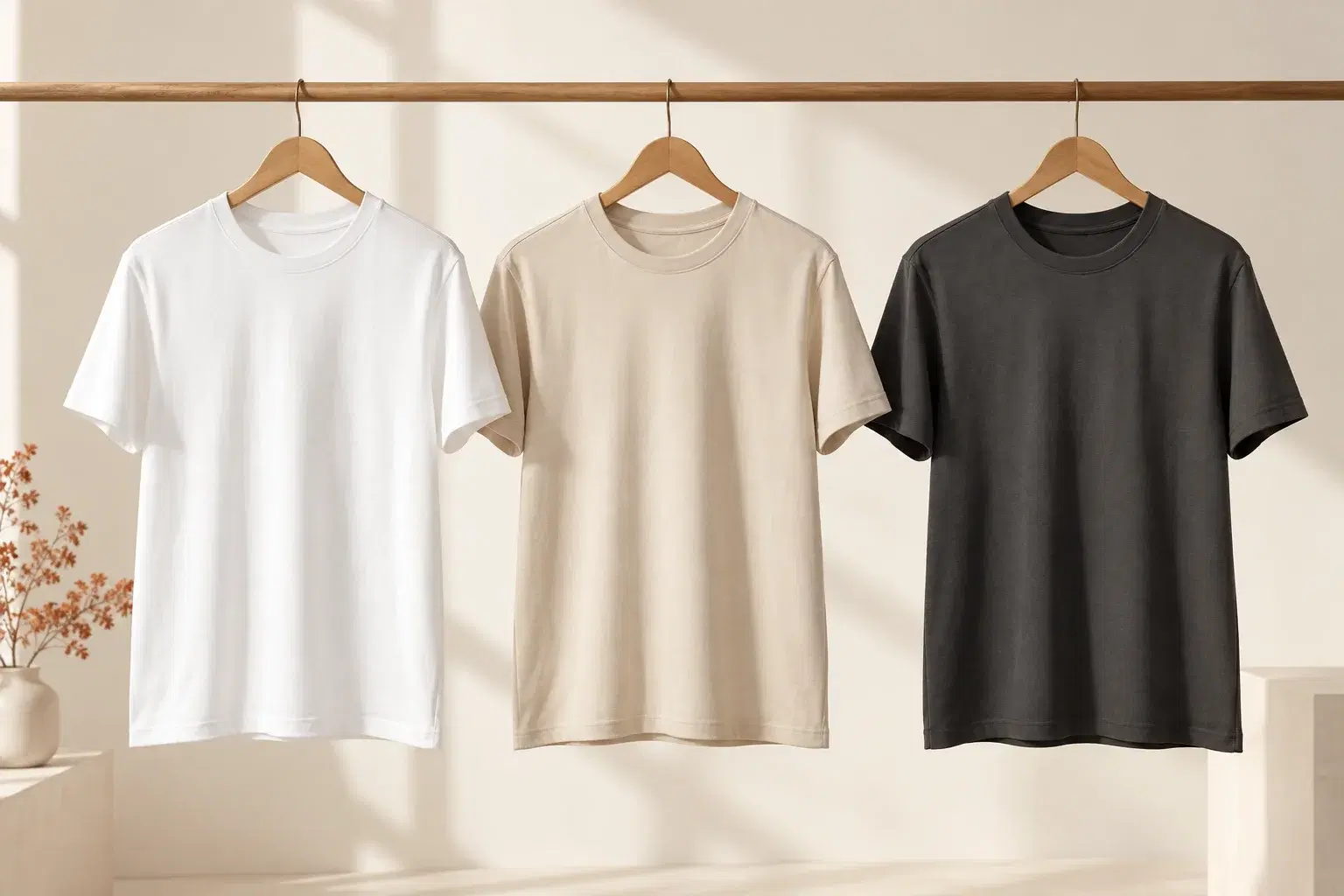
Plenty of apparel video doesn't need a body at all. Print detail, fabric texture, stitching, packaging, the piece moving on a hanger. AI handles these well, and none of them make a claim about how the garment fits a person.
The working rule is simple: show the product, don't testify about wearing it.
Size and colorway variants
Once one real asset exists, generating the same shot across eight colorways costs a fraction of shooting each. For a drop with multiple variants this is the clearest cost win available, and there's no honesty problem because the garment is genuinely the one you sell.
Ready to test this on your own catalog? Start a free trial and build a set of variant videos from listings you already have.
Where Real Creators Still Win
Fit and drape
This is the big one, and it's specific to apparel. Size and fit account for about 70% of online apparel returns, and the estimated US return rate for online apparel and footwear is 23.4%.10 Fit is the single most expensive question your product page answers.
A synthetic body can't answer it honestly. It has no real measurements, it never wore the garment, and the way fabric falls on it is a guess. Worse, a flattering guess sells the return. You win the order and lose the margin when the piece arrives fitting nothing like the video.
Real creators solve this by being specific: their height, their usual size, what they ordered, where it runs big. That's the content that lowers returns, and AI cannot generate it.
Fabric behavior and print placement
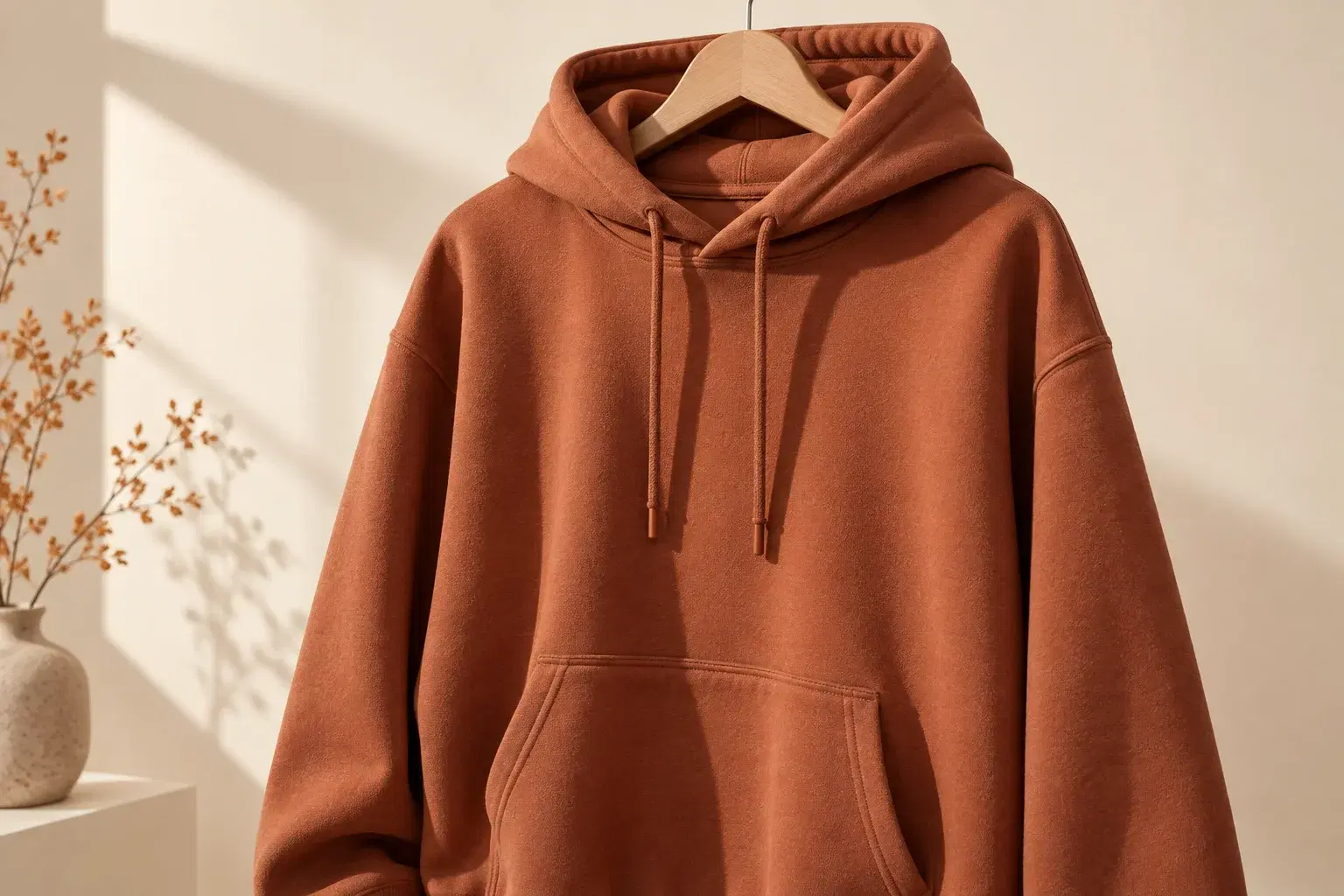
Weight, stretch, and opacity read differently on camera than a generative model predicts. A heavyweight fleece moves nothing like a triblend tee, and text-to-video tools routinely invent print placement, warp lettering, or drift colors across frames.
If you use AI video for clothing, start from real photographs of the real piece rather than generating the garment from a prompt. We compared eight tools on exactly this failure in our breakdown of AI video generators for clothing.
Organic reach and the label
AI labels aren't neutral on organic feeds. A labeled synthetic video in a discovery feed reads as an ad at the exact moment you wanted it to read as a recommendation, which undercuts the entire reason to make UGC-style content in the first place.
Paid is where the viewer expects an ad. Organic is where they expect a person. Match the format to the surface.
The Real Cost Comparison
Vendors quote seat price. The number that matters is cost per usable asset, because both approaches produce output you throw away.
Run it as a formula rather than trusting anyone's headline price:
Creator UGC per usable asset = (creator fee + product cost + shipping + revision time) ÷ assets you'd actually run
AI UGC per usable asset = (monthly subscription + generation credits) ÷ renders that clear your quality bar
Two inputs do most of the work here, and both get left out of vendor math:
- Your discard rate. AI tools bill per generation, not per keeper. If half your renders show warped print or a garment that doesn't match the product, your real cost per asset doubles.
- Return cost. A creator asset that prevents fit returns can pay for itself on margin alone, and that saving never appears in a per-video comparison.
The honest conclusion is that AI wins decisively on paid variant volume, creators win on anything touching fit, and the per-asset gap narrows once you count discards. Plug in your own numbers before committing to either.11
A Two-Track Workflow You Can Run Solo
Run both, assigned by job rather than by budget:
- AI track, paid and variants. Generate ad variants and colorway cuts from real product photography. Test hooks in paid, keep the label visible, and keep every script free of first-person ownership claims.
- Creator track, fit and organic. Send product to a small number of creators who will state their height, size, and honest fit notes. This is your returns defense and your organic social proof.
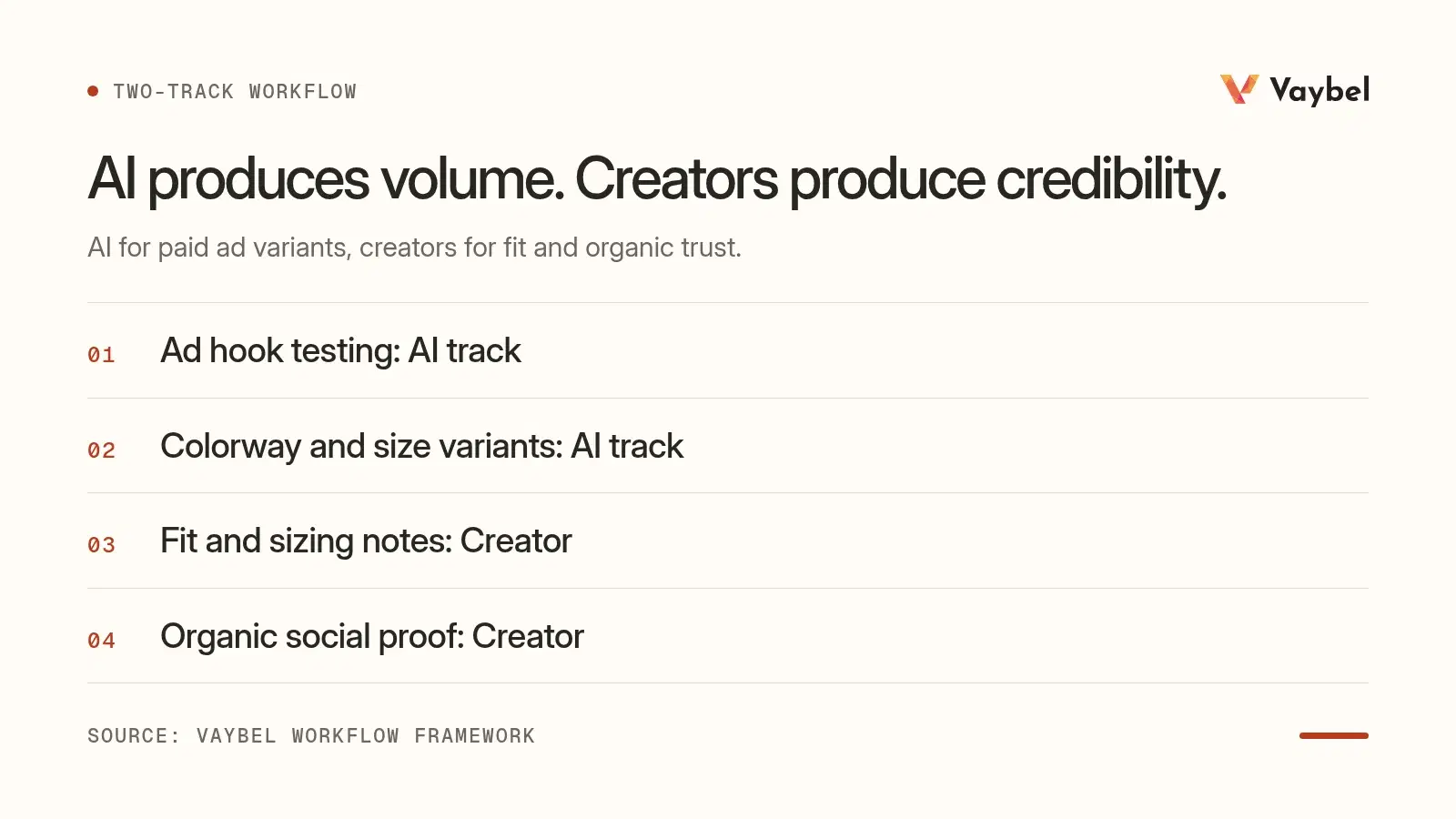
The split is straightforward: AI produces volume, creators produce credibility.
| Job | Track | Why |
|---|---|---|
| Ad hook testing | AI | Volume beats polish in paid |
| Colorway and size variants | AI | One real asset covers many SKUs |
| Print and fabric detail | AI | No body, no fit claim |
| Fit and sizing notes | Creator | Drives about 70% of apparel returns10 |
| Organic social proof | Creator | The AI label undercuts it |
| Long-term wear | Creator | AI can't testify to it1 |
Our full product video workflow for clothing brands covers the organic side in depth. If you're running this on TikTok, TikTok Shop automation handles the publishing cadence.
The brands getting this right treat AI as a production method, not a substitute for a customer. That's how H&M described its digital twin plan: real models who own the rights to their twins and get paid when they're used, with AI handling the rendering.9 Scale it down to a solo brand and the principle survives intact.
Frequently Asked Questions
Are AI UGC ads legal?
The FTC says its reviews and testimonials rule has no blanket prohibition on AI-generated avatars in marketing.2 What the rule prohibits is a fake or false review or testimonial, such as one from a customer who doesn't exist.1 Other rules still apply, including platform labeling policies and New York's disclosure law for synthetic performers.67 Keep the presenter from claiming to own or have worn the product, and label the video as AI-generated.
Can you do UGC with an AI creator?
You can produce UGC video with an AI presenter, and for paid ad testing it works. What you can't do is pass it off as a genuine customer experience. Treat it as branded creative that happens to look casual, not as social proof.
Do AI-generated ads actually work?
They work where the viewer already knows they're watching an ad, which mostly means paid placements and hook testing. They work poorly on organic feeds, where the AI label removes the authenticity the format depends on.
Is UGC dead?
No. What's fading is low-effort UGC that any tool can imitate. Content only a real person can make, honest fit notes, genuine wear over time, is worth more now than before, because the generic version became free.
How much do UGC creators charge?
Rates vary widely by follower count, usage rights, and exclusivity, so treat any single published figure skeptically. Calculate your own number using the per-usable-asset formula above, including product and shipping cost.
The Question to Ask Before You Generate
AI UGC is a real tool with a narrow, valuable job for clothing brands. Use it for paid ad variants, product demonstration, and colorway coverage. Keep real creators for anything involving fit, because fit drives most of your returns and no synthetic body can speak to it honestly.10
Before you generate a video, ask one question: does this claim to be a customer? If yes, either make it a real one or cut the claim. That single filter catches the claim the FTC's testimonial rule is written to stop, and it steers you away from the kind of debate Guess set off in Vogue.18
Start from real garments, label what's synthetic where people will see it, and let AI do the part it's genuinely good at.
Start your free trial → and turn the product photography you already have into social video, with no credit card required.
Footnotes
-
Federal Trade Commission, "Federal Trade Commission Announces Final Rule Banning Fake Reviews and Testimonials," August 14, 2024. Rule effective October 21, 2024. https://www.ftc.gov/news-events/news/press-releases/2024/08/federal-trade-commission-announces-final-rule-banning-fake-reviews-testimonials ↩ ↩2 ↩3 ↩4 ↩5 ↩6 ↩7 ↩8
-
Federal Trade Commission, "The Consumer Reviews and Testimonials Rule: Questions and Answers." States the rule "has no blanket prohibition on the use of AI-generated avatars in marketing." https://www.ftc.gov/business-guidance/resources/consumer-reviews-testimonials-rule-questions-answers ↩ ↩2 ↩3 ↩4 ↩5 ↩6 ↩7 ↩8 ↩9
-
Search volume trend for "AI UGC" and related terms, DataForSEO Google Ads data, US, pulled September 24, 2026. Directional, not audited. ↩
-
Federal Trade Commission, "FTC Publishes Inflation-Adjusted Civil Penalty Amounts for 2025": the maximum civil penalty for violations of Section 5(m)(1)(A) of the FTC Act rose to $53,088, effective January 17, 2025. The regulation that sets the amount, 16 CFR 1.98, has not been amended since. https://www.ftc.gov/news-events/news/press-releases/2025/02/ftc-publishes-inflation-adjusted-civil-penalty-amounts-2025 ↩ ↩2
-
Retail Gazette, "Mango debuts AI-created campaign for its teen line," July 2024. https://www.retailgazette.co.uk/blog/2024/07/mango-ai-campaign/ ↩
-
TikTok Newsroom, "Partnering with our industry to advance AI transparency and literacy," May 9, 2024. TikTok says it has required creators to label realistic AI-generated content, and that it reads Content Credentials to auto-label AI-generated content made on some other platforms. https://newsroom.tiktok.com/en-us/partnering-with-our-industry-to-advance-ai-transparency-and-literacy ↩ ↩2
-
New York's synthetic performer disclosure law (S.8420-A/A.8887-B) took effect June 9, 2026. Reed Smith's summary: most ads containing AI- or computer-generated "synthetic performers" that may reach New York audiences must conspicuously disclose that the person isn't real. https://www.reedsmith.com/our-insights/blogs/viewpoints/102n129/fake-performer-real-penalty-what-advertisers-need-to-know-before-june-9/ ↩ ↩2
-
CNN, "AI models in Vogue: Your favorite model may not be real thanks to AI," July 31, 2025. https://www.cnn.com/2025/07/31/style/vogue-ai-models-guess-campaign ↩ ↩2
-
CNN, March 28, 2025: H&M plans 30 digital twins of its models; the models would own the rights to their twin and "get paid on each occasion just like on any campaign production." The same report carries the Model Alliance's criticism. https://www.cnn.com/2025/03/28/style/h-and-m-ai-models-intl-scli Watermarking reported by PYMNTS: https://www.pymnts.com/artificial-intelligence-2/2025/digital-doppelgangers-hm-explores-ai-digital-twins-for-fashion-retail/ ↩ ↩2
-
Coresight Research and Alvanon, "Shifting the Size and Fit Paradigm," as reported by Sourcing Journal, May 15, 2026: sizing and fit issues account for approximately 70 percent of online apparel returns in the last 12 months, with an estimated 23.4 percent return rate for the US online apparel and footwear market in 2025. https://wwd.com/sourcing-journal/industry-news/coresight-alvanon-sizing-fit-issues-online-returns-glp-1-1238954878/ ↩ ↩2 ↩3
-
Cost framework is a calculation method, not a quoted price. Creator fees, subscription tiers, and discard rates vary widely by brand, category, and quality bar. ↩